




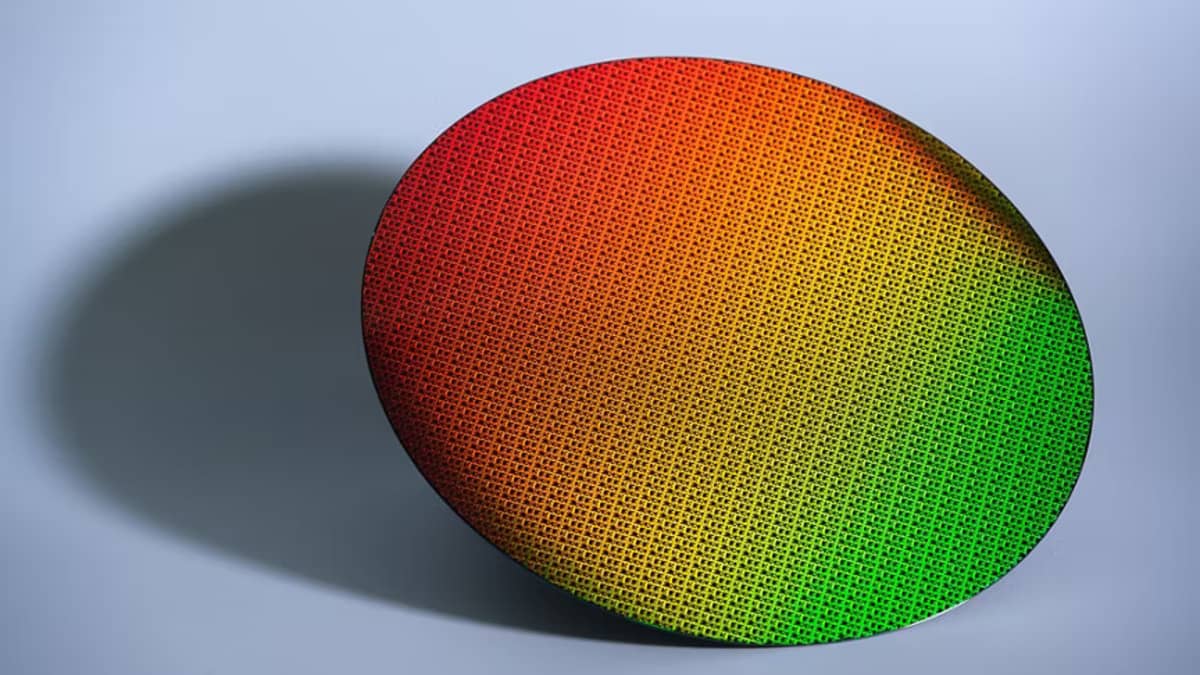
Intel’s 18A process is shaping up to be a massive breakthrough in the world of semiconductors, with reports indicating that its SRAM density now matches that of TSMC’s N2 process.
This marks a major step forward for Intel, especially in comparison to its previous processes, as the company continues to compete aggressively with TSMC.
SRAM Density: The Key Battleground
Both Intel and TSMC have made significant strides in SRAM (Static Random Access Memory) density, a crucial factor in chip performance.
According to reports from the ISSCC sessions, both companies’ cutting-edge processes now boast 38 Mb/mm² of SRAM density.
This achievement significantly narrows the gap between Intel’s 18A and TSMC’s N2, which has long been considered a leader in the field.
What Makes Intel’s 18A Process Special?
One of the most notable innovations in Intel’s 18A process is the integration of BSPDN (Backside Power Delivery).
This revolutionary technology moves power delivery to the backside of the wafer, improving both power efficiency and signal integrity. This marks an industry first and could play a pivotal role in future chip designs.
The 18A high-density version also reports impressive macro bit density, with 38.1 Mb/mm² being achieved in the large array configuration.
This is a strong indicator that Intel’s technology has reached a competitive level, although success in chip production yields remains a critical test.
TSMC’s N2 Process: A Strong Rival
Not to be outdone, TSMC has introduced its N2 process, which boasts a 12% improvement in SRAM density through the use of GAA (Gate-All-Around) technology.
The high-performance SRAM in the N2 process shows a remarkable 18% improvement, providing TSMC with a more efficient and customizable process than the traditional FinFET technology.
The N2’s nanosheet-based architecture allows for more precise control, making it a formidable player in the high-end chip manufacturing space.
However, the real test for both companies will be how these technologies perform when they enter the supply chain and how they are adopted in actual chip production.
The Semiconductor Race: What’s Next for Intel and TSMC?
The competition between Intel and TSMC in the semiconductor space is heating up. Intel’s 18A process has the potential to revolutionize the industry, especially if it can match or surpass TSMC in terms of yield rates and chip production efficiency.
With political backing and increasing momentum, Intel is positioning itself as a formidable competitor to TSMC’s N2 process. The semiconductor race between these two giants is not just about SRAM density—it’s about who can bring the most efficient, powerful, and cost-effective chips to market.
And based on these recent developments, Intel may be gearing up for a comeback that could change the game for the entire industry.