



Looking for the best knowledge base tools to actually learn from your saved content – not just store it? You’re not alone.
Most knowledge management apps help you organize notes, links, and PDFs. But organization alone doesn’t equal understanding. The real challenge isn’t saving information – it’s absorbing it, retaining it, and applying it when it matters.
After testing dozens of platforms, here are the top knowledge base tools that help you move from “I saved this” → “I learned this.”
And at #1? A tool that completely rethinks what a knowledge base can do.
#1: BeFreed – Turn Any Content Into Personalized Audio Lessons
Best for: Learners who want to finish what they start – without screen time or language barriers.
Why BeFreed Wins
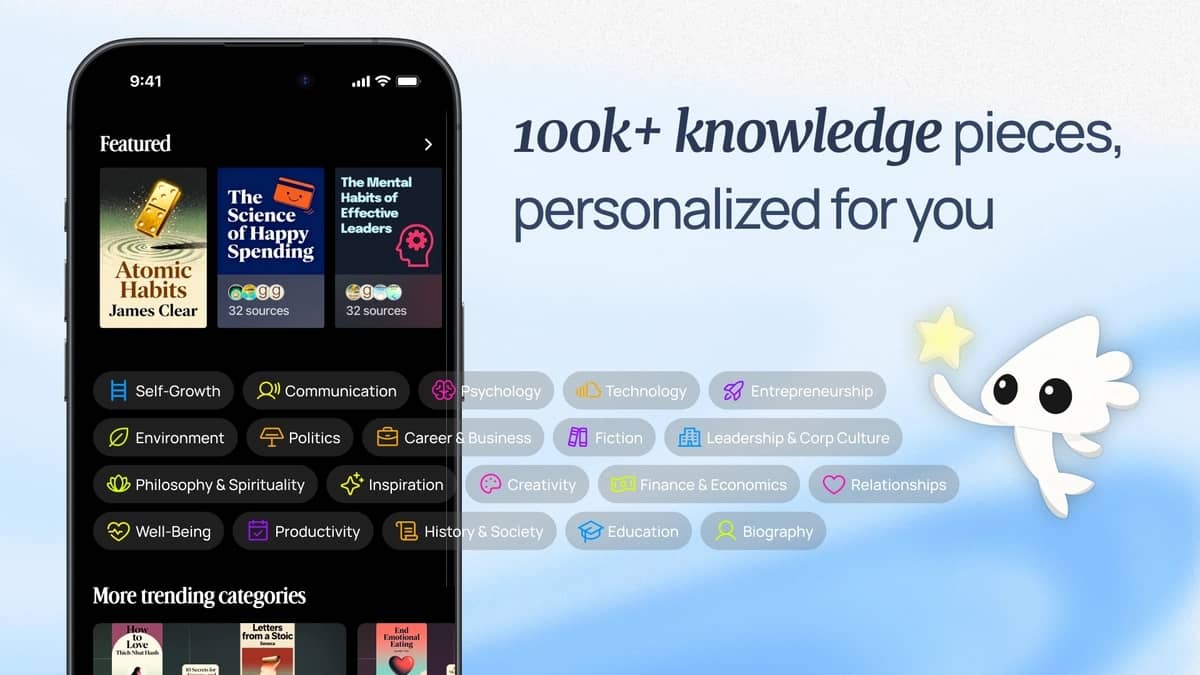
BeFreed isn’t just another note-taking app. It’s an AI-powered learning companion that transforms any knowledge source – a topic, PDF, YouTube URL, or even a random curiosity – into a personalized, step-by-step audio learning plan.
While other tools help you store knowledge, BeFreed helps you absorb it.
Key Features
- Start Learning Plans: Turn any topic, file, or link into a structured audio course
- Full Personalization: Choose lesson length, voice, tone, and teaching style
- Interactive Learning: Ask questions mid-lesson like you’re talking to a tutor
- Retention Tools: Highlights, flashcards, and progress tracking built-in
- Community Sharing: Discover and publish learning paths

The BeFreed Difference
| Competitor Type | Their Limit | BeFreed’s Edge |
| Book summary apps (Blinkist, Headway) | Same summary for everyone | Fully customizable depth & delivery |
| AI audio tools (NotebookLM) | Static formats | Dynamic, evolving learning plans |
| Text-to-speech apps (Speechify) | Just reads text | Builds structured learning journeys |
| Audiobooks (Audible, Spotify) | One-size-fits-all | Adapts to your level & schedule |
| Note apps | Storage-focused | Completion-focused learning |
Bottom line: If your goal is to learn, not just collect – BeFreed removes the friction that stops most people from finishing what they start.
#2: Obsidian – For Networked Thinkers Who Love Control
Best for: Writers, researchers, and PKM enthusiasts
Obsidian stores your notes as local Markdown files and connects them using backlinks, forming a powerful “knowledge graph.”
Pros
- Plain text = future-proof
- Powerful linking & graph view
- Fully offline, no vendor lock-in
Cons
- Steep learning curve
- AI requires plugins
- No built-in learning or audio features
#3: Notion – The All-in-One Workspace
Best for: Teams and creators who want flexibility
Notion combines notes, databases, and collaboration with built-in AI.
Pros
- Clean, intuitive UI
- Great for teams
- Built-in AI summaries
Cons
- AI limited to internal workspace
- Can slow down at scale
- Not designed for deep learning retention
#4: Mem – AI-First Note Capture
Best for: Fast thinkers who want automation
Mem uses AI to automatically organize, tag, and connect your notes.
Pros
- Effortless capture
- Smart search
- Minimalist UI
Cons
- Limited export/control
- No structured learning system
- No audio-based learning
#5: Content Base – For Creators With Published Content
Best for: YouTubers, bloggers, educators
Content Base syncs your published content into a centralized, searchable hub.
Pros
- Auto-syncs blogs, videos, newsletters
- Works with external AI tools
- Organized by content type
Cons
- Requires existing content library
- Not optimized for learning journeys
- No audio-first features
#6: Document360 – For Customer-Facing Knowledge Bases
Best for: Support teams and documentation
Document360 helps build polished help centers and internal wikis.
Pros
- Clean, professional documentation
- SEO & analytics built-in
- Version control
Cons
- Overkill for personal use
- Not built for learning
- No personalization or audio features
#7: ClickUp – Task-Integrated Knowledge Management
Best for: Teams managing projects + knowledge together
ClickUp combines docs, tasks, and workflows into a single ecosystem.
Pros
- Strong task integration
- AI-powered search
- Good for team workflows
Cons
- Feature-heavy learning curve
- Not focused on learning outcomes
- Limited retention tools
How to Choose the Right Knowledge Base Tool
What’s your goal?
- Learning & retention: Choose tools with active engagement (audio, quizzes, tracking)
- Storage & retrieval: Traditional note apps work fine
Do you prefer audio?
If you learn while commuting, working out, or multitasking – audio-first tools like BeFreed are a huge advantage.
Do you need portability?
If you want to connect your knowledge with other AI tools, look for API/MCP compatibility.
Final Verdict: Why BeFreed Takes #1
Most tools solve the organization problem.
BeFreed solves the completion problem.
Great ideas only matter if you actually absorb them. But between screen fatigue, language barriers, and limited time – most content goes unfinished.
BeFreed flips that by adapting to how humans naturally learn:
- 🎧 Learn while commuting or multitasking
- 🌍 Switch language or complexity instantly
- 🗣️ Ask questions in real time
- 📈 Track real progress – not just saved notes