

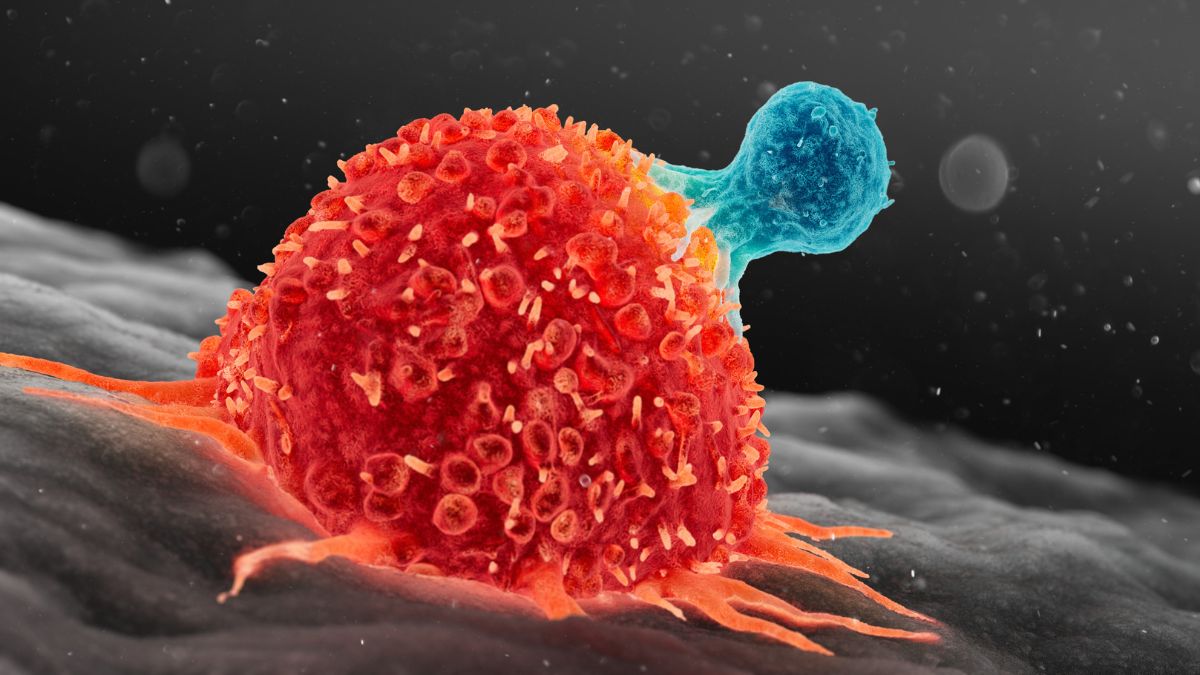
Scientists have developed a new method to make cancer-fighting immune cells, called T cells, work better and longer. The strategy involves giving T cells a short break from fighting cancer, which helps them avoid exhaustion and regain strength.
The research was led by the Chinese Academy of Sciences (CAS) and the University of Science and Technology of China. The findings were published in the journal PNAS.
How It Works
The scientists created a special hydrogel, called a biomimetic physical barrier (BPB), which they inject directly into tumors. This hydrogel turns from a liquid into a semi-solid at body temperature, building a temporary wall between the T cells and the cancer cells.
This break allows a group of young T cells, called progenitor exhausted T cells (Tpex), to gather and recover inside the tumor. These cells are like new recruits—they have not yet become too tired from constantly fighting cancer.
When researchers remove the barrier using near-infrared light, the Tpex cells wake up and transform into stronger, more powerful T cells. These cells are then able to attack the cancer more effectively.
Better Results and Lasting Immunity
The new method led to better cancer control in laboratory tests. In some cases, combining this approach with standard immunotherapy completely cured half of the tumors.
The process also helped the immune system remember the tumor, making it easier to fight off cancer if it comes back later.
A New Approach to Immunotherapy
The researchers call this method “immunological rhythm control.” Instead of pushing T cells to work non-stop, the strategy gives them scheduled pauses to maintain their strength.
“By controlling the timing of the T cell and tumor interaction, we can prevent T cell exhaustion and create a stronger immune response,” said Gong Ningqiang, one of the lead researchers.
Experts believe this new technique could improve existing cancer treatments and be used alongside other therapies. Scientists are now studying ways to apply this method to different types of tumors and patients.







 Follow on Google News