

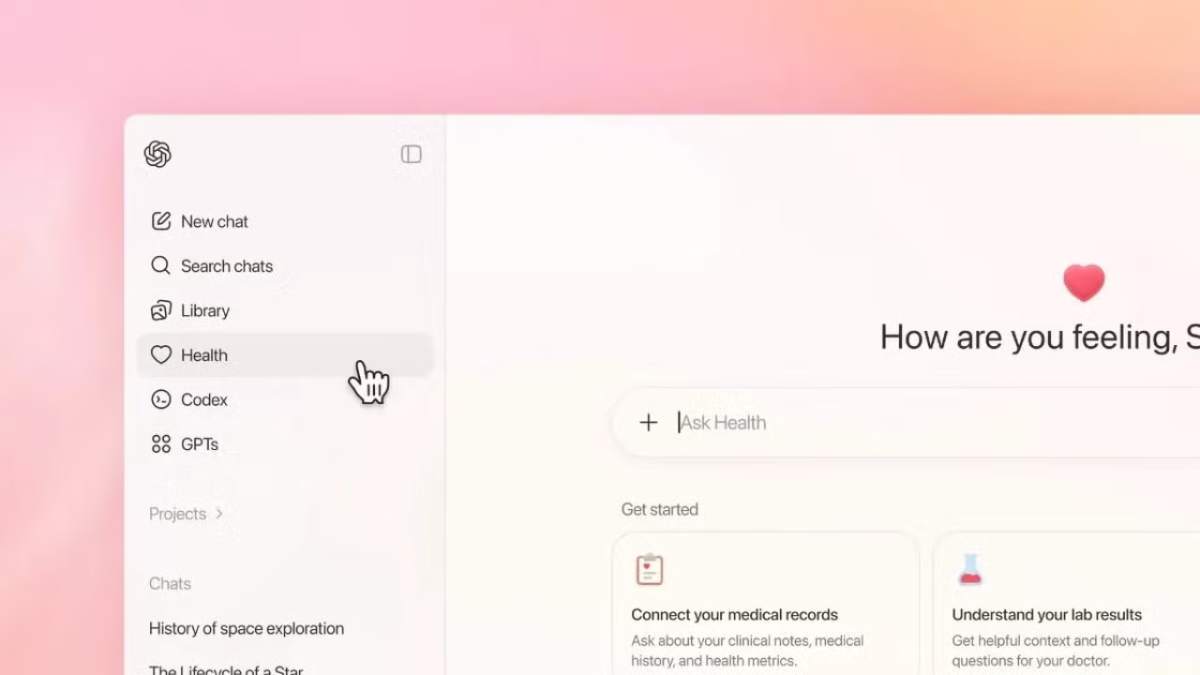
OpenAI has introduced ChatGPT Health, a new feature designed to help users organize their health information, track patterns, and prepare for medical appointments. The system is not intended to replace doctors, but to complement healthcare by giving people a clearer understanding of their data.
ChatGPT Health securely integrates information from medical records, fitness apps, and other health services. It adapts to a user’s personal data to provide tailored explanations, such as tracking changes in cholesterol levels or offering exercise guidance based on current habits.
The service functions as a dedicated space within ChatGPT, keeping health data isolated from other chats. Users can connect apps like Apple Health, MyFitnessPal, Weight Watchers, Peloton, and import medical summaries or test results, all while maintaining a high level of security and privacy.
Privacy is a key focus. ChatGPT Health uses encryption and compartmentalization to protect sensitive medical information. Conversations in this space are not used to train AI models, and users can delete data or revoke app access at any time. Multi-factor authentication adds an extra layer of security.
Users in the U.S. can sign up for a waiting list to access ChatGPT Health on Free, Go, Plus, and Pro plans. Once activated, the Health section allows users to import files, connect apps, or upload medical records, and then ask questions like “How have my sleep habits changed?” or “What should I review with my doctor?”
OpenAI emphasizes that ChatGPT Health is a tool for better understanding and organizing health information, not a replacement for professional medical advice. The service reflects the growing role of AI in personal healthcare management, giving users more control while maintaining strong safeguards.