
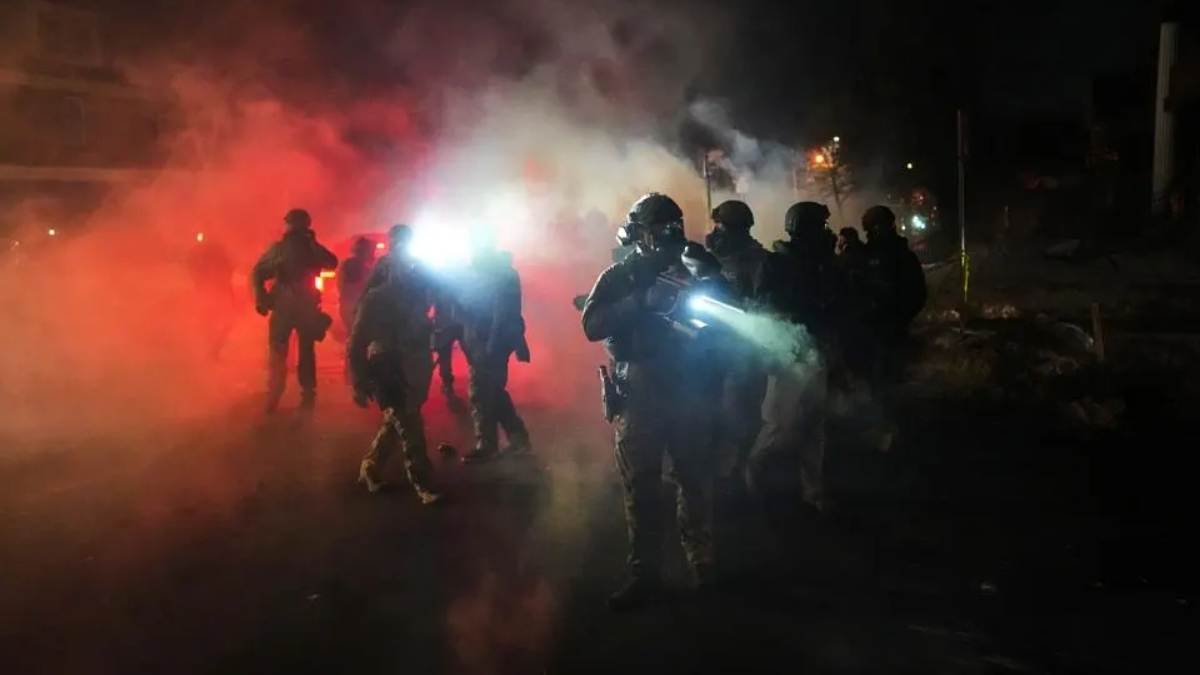
Protests broke out in Minneapolis overnight after a federal law enforcement officer shot a man during an arrest on Wednesday. The shooting happened during a traffic stop and quickly led to clashes between protesters and federal agents in the area.
The Department of Homeland Security said the man was a Venezuelan migrant who was in the U.S. illegally. Officials said an agent fired a defensive shot that struck the man in the leg after he tried to flee and later resisted arrest. The injury was described as non-life-threatening.
According to DHS, the situation escalated when two other people allegedly attacked the officer with a blunt object. All three individuals reportedly ran into an apartment and barricaded themselves inside before officers intervened. The wounded man and the officer were taken to the hospital, and the other two people were taken into custody.
As news of the shooting spread, more than 200 protesters gathered near the scene. Federal agents used chemical irritants to disperse the crowd, local media reported. Some protesters were seen throwing objects at officers during the confrontation.
President Donald Trump responded Thursday morning by threatening to invoke the Insurrection Act. In a social media post, he criticized the protests and defended the actions of federal agents involved in immigration enforcement.
Minneapolis Mayor Jacob Frey and Police Chief Brian O’Hara said the shooting occurred on the city’s north side. Frey said many details remain unclear and again called for federal immigration agents to leave the city. O’Hara confirmed only one person was shot and urged the crowd to disperse.
Minnesota Governor Tim Walz strongly criticized the federal operation earlier in the day. He accused federal agents of aggressive tactics and called the situation an occupation. He urged the federal government to end its actions in the state.
The protests began to calm by Thursday morning as more federal officials arrived at the scene. Meanwhile, a federal judge ruled that immigration enforcement operations in Minnesota can continue for now, despite legal challenges from state officials.







 Follow on Google News