

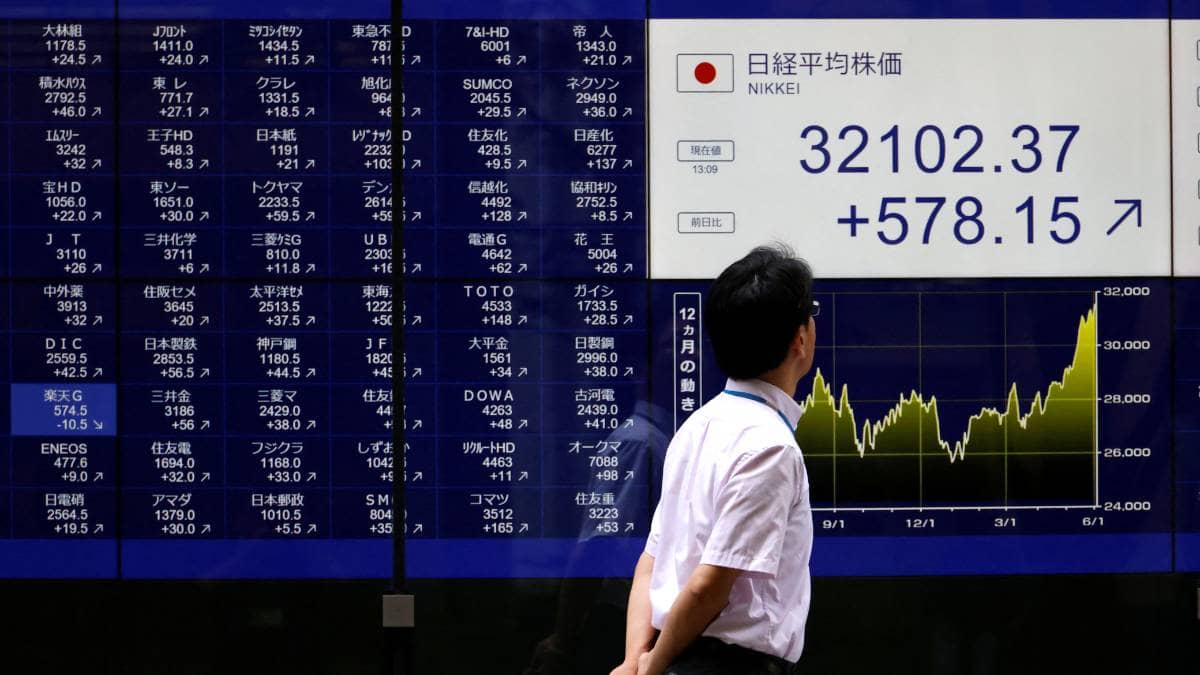
Japan’s stock markets are hitting record levels after Prime Minister Sanae Takaichi’s election win, but analysts warn the rally could be fragile.
The Topix index trades at 18 times forward earnings, while the Nikkei 225 has surged over 5% since the ruling Liberal Democratic Party’s victory. Investors are betting on fiscal stimulus, tax cuts, and spending in sectors like semiconductors, defense, and energy.
Bloomberg strategist Hideyuki Sano said valuations are the highest in decades, leaving little room for error if growth disappoints or global shocks hit.
Key risks include overreliance on government promises, Japan’s massive public debt, and volatile bond yields. The weak yen helps exporters, but a reversal could hurt gains.
Some analysts worry the rally is driven more by sentiment than fundamentals, despite earnings growth forecasts of 8–9% and improving ROE. Profit-taking has already appeared amid mixed global cues.
Historical parallels raise caution, with some comparing the speed of the surge to past overextended cycles, though Japan’s market remains cheaper than some U.S. peers.
Bulls cite wage growth, corporate buybacks, and reflation as long-term support, but near-term euphoria leaves stocks exposed. Investors are advised to focus on selective exposure and monitor currency and policy developments.
The Nikkei hovers near 57,000, with volatility highlighting the market’s sensitivity to both domestic policy and global trends.