
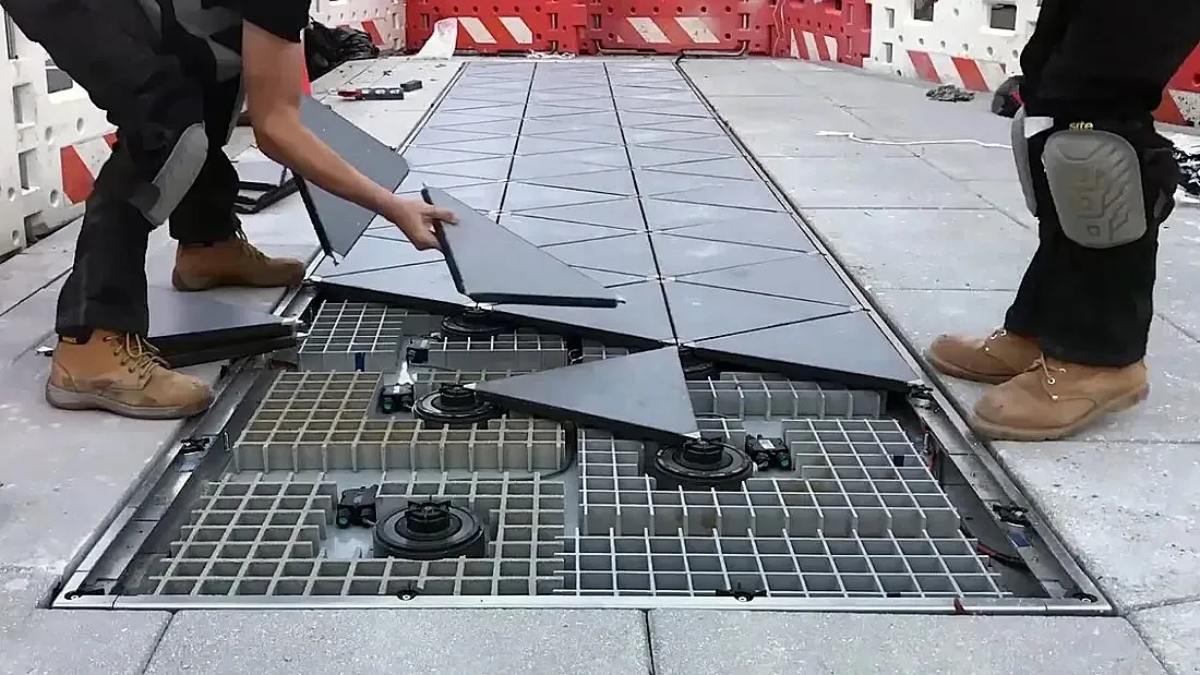
Japan has experimented with technology that generates small amounts of electricity from human footsteps using special kinetic floor tiles. These systems rely on piezoelectric materials, which create electricity when pressure is applied, such as when someone walks across them.
One of the most well-known installations appeared at Shibuya Station in Tokyo. The tiles were installed in busy walkways, where thousands of commuters pass every day. Each step produces a tiny amount of energy, which adds up over time and can power small devices like LED lights, signs, and display panels.
The technology works by embedding sensors or generators beneath floor panels. When a person steps down, the pressure creates mechanical stress. This stress triggers the piezoelectric material to generate an electrical charge, usually measured in milliwatts or small bursts of energy.
Japanese companies such as Soundpower Corporation have developed these systems, while global firms like Pavegen have also tested similar technology in Japan and other countries. These installations often serve as demonstrations of renewable energy innovation in urban environments.
However, the amount of electricity produced is extremely small. Even in crowded areas, the total output is only enough to power low-energy devices such as LED lighting or sensors. It cannot power homes, buildings, or major infrastructure.
Some early projects were reduced or discontinued because installation and maintenance costs were higher than the value of the electricity generated. Despite this, the technology remains useful for awareness campaigns, smart city experiments, and sustainability demonstrations.
Recent viral social media posts have brought renewed attention to the concept. While claims that Japan is powering cities with footsteps are exaggerated, the underlying technology is real and shows how everyday human activity can contribute to micro-scale renewable energy solutions.
Japan continues to explore innovative energy ideas, but for now, footstep electricity remains a symbolic and educational technology rather than a large-scale power source.