
The AI music generation industry has developed rapidly since 2023 and is now a practical toolset for creators, musicians, and video producers. By 2026, platforms such as Suno, Udio, and Soundraw represent three distinct approaches to AI-assisted music creation rather than competing directly in the same category.
Each tool is designed for a different workflow: full song generation, production-level control, or background music for content creation.
Suno vs Udio vs Soundraw Compared: At a Glance
| Tool | Primary Focus | Best Use Case | Vocals | Free Access | Starting Price |
|---|---|---|---|---|---|
| Suno | Full song generation | Creators, musicians, hobbyists | Yes | Limited daily credits | $10/month |
| Udio | High-fidelity production control | Producers, remixers | Yes | Limited credits | $10/month |
| Soundraw | Adaptive background music | Video editors, podcasters | No | Trial only | $16.99/month |
Industry Context: How AI Music Tools Work in 2026
AI music platforms generally fall into three categories:
- Text-to-music generation (Suno, Udio): Generates complete songs from prompts
- Studio-assisted composition tools (Udio advanced workflows): Focused on structure, refinement, and editing
- Adaptive scoring platforms (Soundraw): Designed for video and background audio production
Unlike traditional music software (DAWs), these tools rely on machine learning models trained on large audio datasets. However, output quality, licensing terms, and creative control vary significantly between platforms.
Suno: Full Song Generation with Vocals
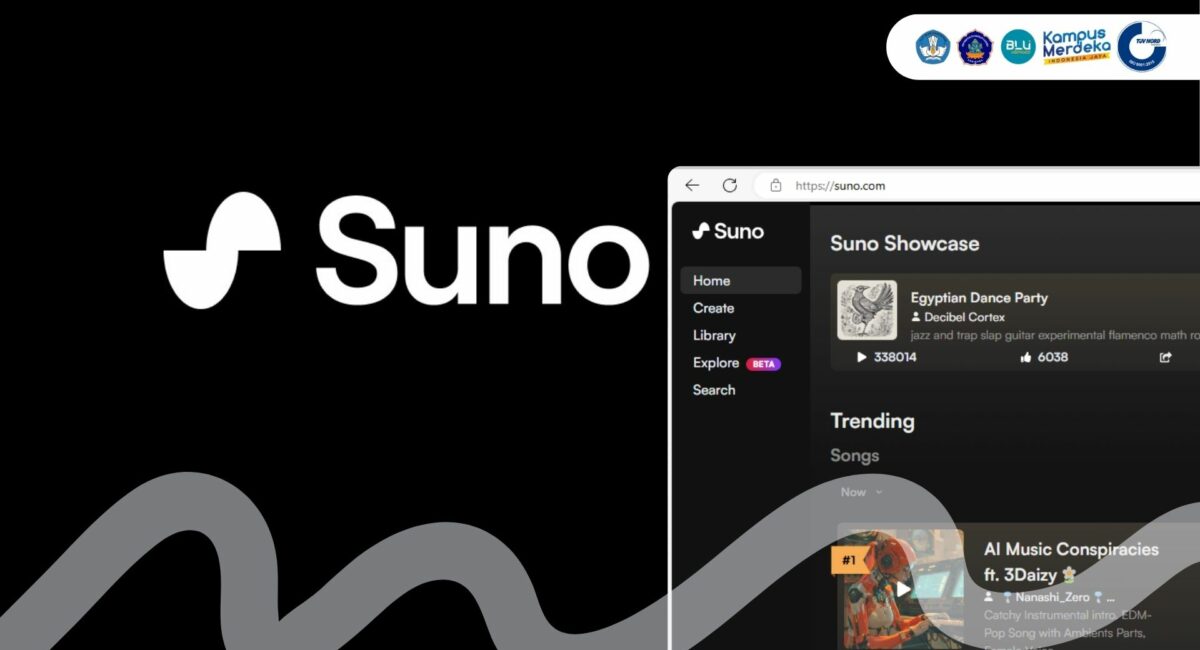
Suno is currently one of the most widely used AI music generators, known for producing complete songs with vocals, lyrics, and instrumentation from simple text prompts.
Key Capabilities
- Generates full tracks in under a minute
- Supports vocal and instrumental compositions
- Offers extended song length options in newer models
- Includes editing features via Suno Studio (browser-based workflow)
- Allows remixing from audio uploads or voice inputs
Suno is generally designed for speed and accessibility rather than deep production control.
Strengths
- Very fast creative output
- Strong vocal generation compared to most competitors
- Beginner-friendly interface
- Useful for demos and content creation
Limitations
- Output consistency varies depending on prompts
- Limited granular control compared to production tools
- Licensing terms and commercial use conditions should be reviewed carefully before monetization
- Advanced editing still less flexible than traditional DAWs
Best For
Content creators, musicians prototyping ideas, and users who want complete songs without technical production knowledge.
Udio: High-Control AI Music Production
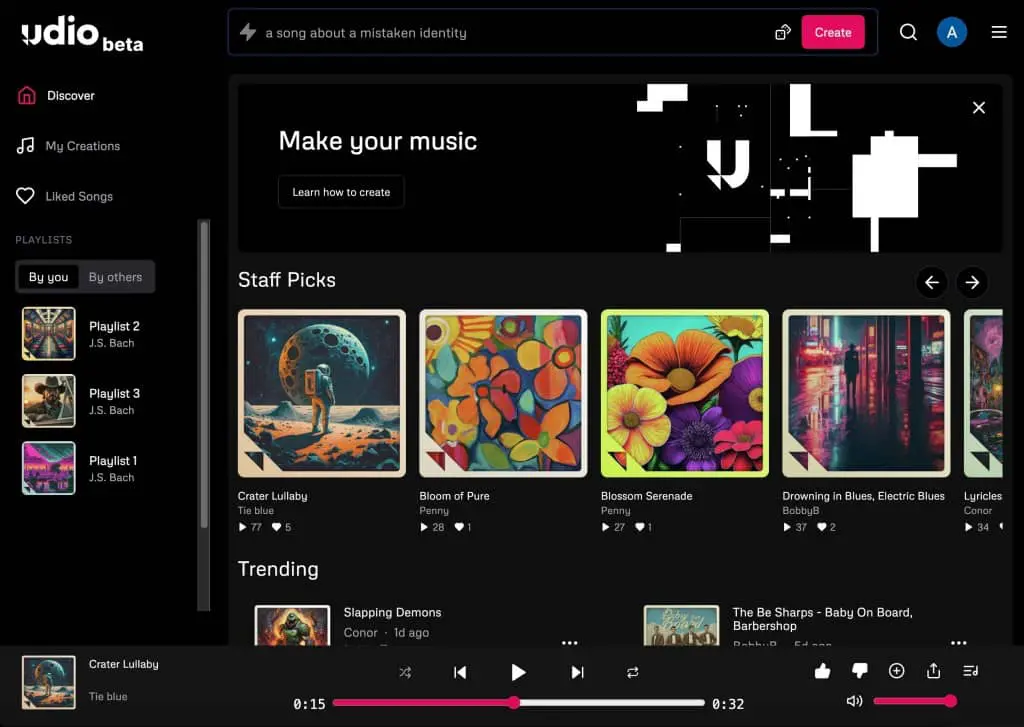
Udio takes a more structured, production-oriented approach compared to Suno. Instead of generating complete songs instantly, it builds music in segments that can be extended and refined.
Key Capabilities
- Segment-based generation for structured composition
- High-quality audio output suitable for production use
- Style blending and inpainting tools for targeted edits
- Stem separation available on paid plans (where supported)
- Designed for iterative workflow rather than one-shot generation
Strengths
- Higher level of audio detail and mix clarity
- Greater creative control over arrangement
- More suitable for professional production workflows
- Better flexibility for remixing and restructuring tracks
Limitations
- Requires more time and iteration than Suno
- Learning curve is higher for new users
- Feature availability (such as downloads or stems) may vary based on licensing updates
- Free tier is limited in output capacity
Best For
Music producers, remix artists, and creators who want more control over structure and sound design.
Soundraw: Adaptive Music for Video and Content Creation
Soundraw is not a direct competitor to Suno or Udio in songwriting. Instead, it focuses on generating royalty-free background music designed for visual content.
Key Capabilities
- Customizable music based on mood, genre, and tempo
- Timeline-based editing for video synchronization
- Instrumental-only output
- Designed for commercial content use cases
Strengths
- Predictable, production-ready background music
- Easy integration into video workflows
- Suitable for YouTube, podcasts, and advertising content
- Clear focus on licensing and usability
Limitations
- No vocal generation
- Less creative unpredictability compared to Suno/Udio
- Paid access required for full functionality
- Not intended for standalone music creation
Best For
Video editors, content creators, and businesses needing consistent background music for media production.
Comparison Summary
Audio Quality
Udio generally provides the highest level of technical detail in mixing and separation. Suno performs strongly in vocal realism and creative output. Soundraw prioritizes clarity for background use rather than standalone listening quality.
Creative Control
Udio offers the most granular control through segment-based editing. Suno balances simplicity with moderate editing features. Soundraw provides structured but limited customization focused on video timing.
Ease of Use
Suno is the most accessible tool for beginners. Soundraw is simple but purpose-specific. Udio requires more experience but offers deeper control.
Commercial Use Considerations
All three platforms provide some level of commercial licensing, but terms vary and may change over time. Users should always review current licensing agreements before publishing monetized content.
Which Tool Should You Use?
- Suno: Best for fast, complete song generation with vocals
- Udio: Best for structured production and remix-oriented workflows
- Soundraw: Best for video background music and commercial content scoring
Rather than competing directly, these tools serve different stages of the modern creative workflow.
Final Perspective
AI music generation in 2026 is no longer experimental. It is a functional layer in modern creative production workflows. However, the tools are still evolving, particularly in areas such as licensing clarity, output consistency, and professional integration.
For most creators, the choice is not about finding a single “best” platform, but selecting the tool that matches their production goal: ideation, production control, or media scoring.

![11 Best FREE DAWs To Create Music in 2024 [NEW & TESTED]](https://nomusica.com/wp-content/uploads/2024/01/FREE-DAWs-To-Create-Music-2.jpg "5 Best Free DAWs in 2026: Which One Should Beginners Start With? 2")