
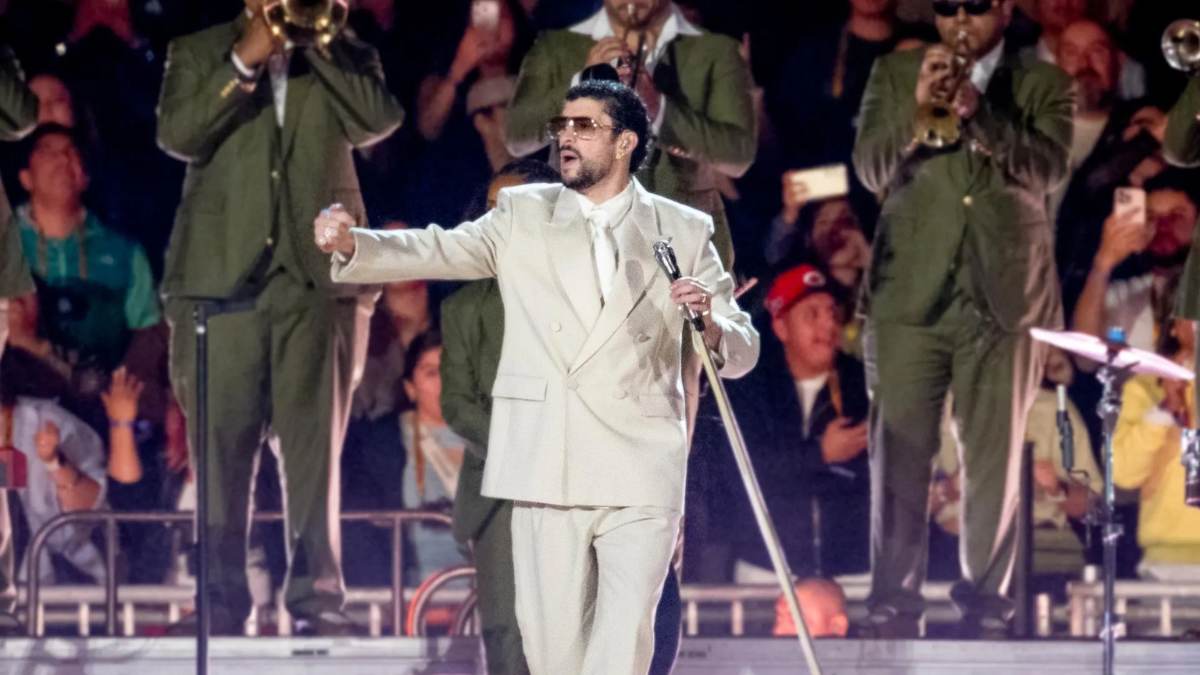
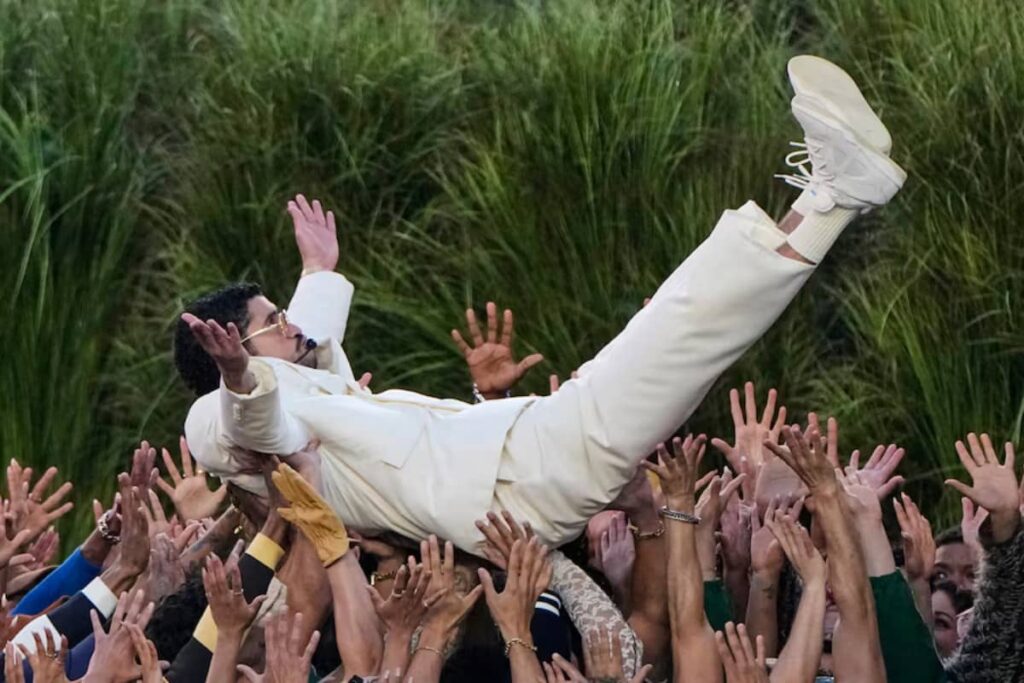
Bad Bunny delivered one of the most culturally significant halftime shows in Super Bowl history during Super Bowl LX on February 8, 2026, at Levi’s Stadium in Santa Clara, California. As the first Latino artist to headline the halftime show primarily in Spanish, the Puerto Rican superstar brought Latin culture to the center of the world’s biggest sporting stage.
Born Benito Antonio Martínez Ocasio, Bad Bunny turned the performance into a celebration of Puerto Rican pride, unity, and identity. The show blended reggaeton, salsa, and Latin pop influences while maintaining a strong political and cultural message focused on love and inclusion.
He was joined by surprise guests Lady Gaga and Ricky Martin, while additional celebrity appearances included Cardi B, Karol G, Pedro Pascal, and Jessica Alba. Their presence helped create a house-party atmosphere that filled the stadium and resonated with viewers worldwide.
Bad Bunny opened the show in a minimalist cream outfit, highlighted by a custom football jersey reading “OCASIO” with the number 64, a detail many fans believe referenced his mother’s birth year. The performance moved quickly, with tight choreography and seamless transitions keeping the energy high throughout.
The full setlist showcased multiple phases of Bad Bunny’s career and included mashups and guest moments:
- Tití Me Preguntó
- Yo Perreo Sola (with “VOY A LLeVARTE PA PR” ending)
- EoO
- Die With a Smile (with “MONACO” intro, featuring Lady Gaga)
- BAILE INoLVIDABLE
- NUEVAYoL
- El Apagón (with “LO QUE LE PASÓ A HAWAii” intro sung by Ricky Martin)
- DtMF (DeBÍ TiRAR MáS FOToS)
The stage design featured a giant pink structure known as “La Casita,” symbolizing a traditional Puerto Rican home. Dancers in vibrant costumes reflected Puerto Rican cultural traditions, reinforcing the show’s strong connection to Bad Bunny’s roots.
The performance closed with a powerful message displayed across the stadium: “The only thing more powerful than hate is love.” Bad Bunny then spiked a football labeled “Together, We Are America,” blending symbolism, sport, and cultural unity.
Critics and fans widely praised the show for making history, boosting Latino representation, and proving that a mostly Spanish-language performance can dominate the world’s biggest entertainment stage.