

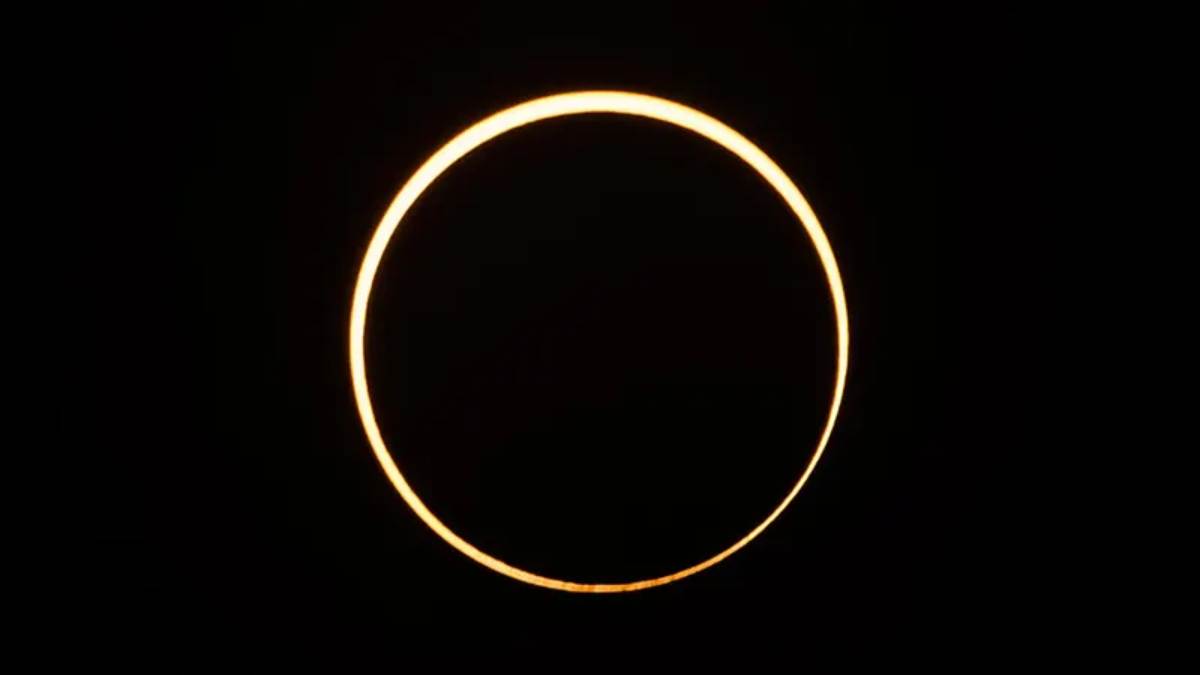
A rare “ring of fire” solar eclipse will take place on Tuesday, February 17, 2026, but most of the world will not see it.
The annular eclipse, where the moon covers most of the sun but leaves a bright ring around it, will appear over remote parts of Antarctica. Only researchers at the Concordia and Mirny stations will get a full view.
Skywatchers in southern Chile, Argentina, and South Africa will see a partial eclipse, but in North America, Europe, and most of the world, the eclipse will go unseen.
The eclipse begins at 07:01 UTC, with the maximum view over Antarctica. It will last about 2 minutes and 20 seconds at its peak. Observers must use special eclipse glasses to look safely.
Annular solar eclipses differ from total eclipses. Instead of complete darkness, the moon appears slightly smaller than the sun, creating a ring of sunlight, often called a “ring of fire.”
The February 17 new moon also has cultural significance. It marks the start of the Chinese New Year, the Year of the Fire Horse, and signals the beginning of Ramadan in the Islamic calendar with the crescent moon on February 18.
Future “ring of fire” eclipses will occur on Feb. 6, 2027, Jan. 26, 2028, and Jun. 1, 2030, visible in parts of South America, Africa, Europe, and Asia.
While most of the world will miss this eclipse, it is a reminder of the rare celestial events that continue to fascinate scientists and skywatchers alike.







 Follow on Google News