
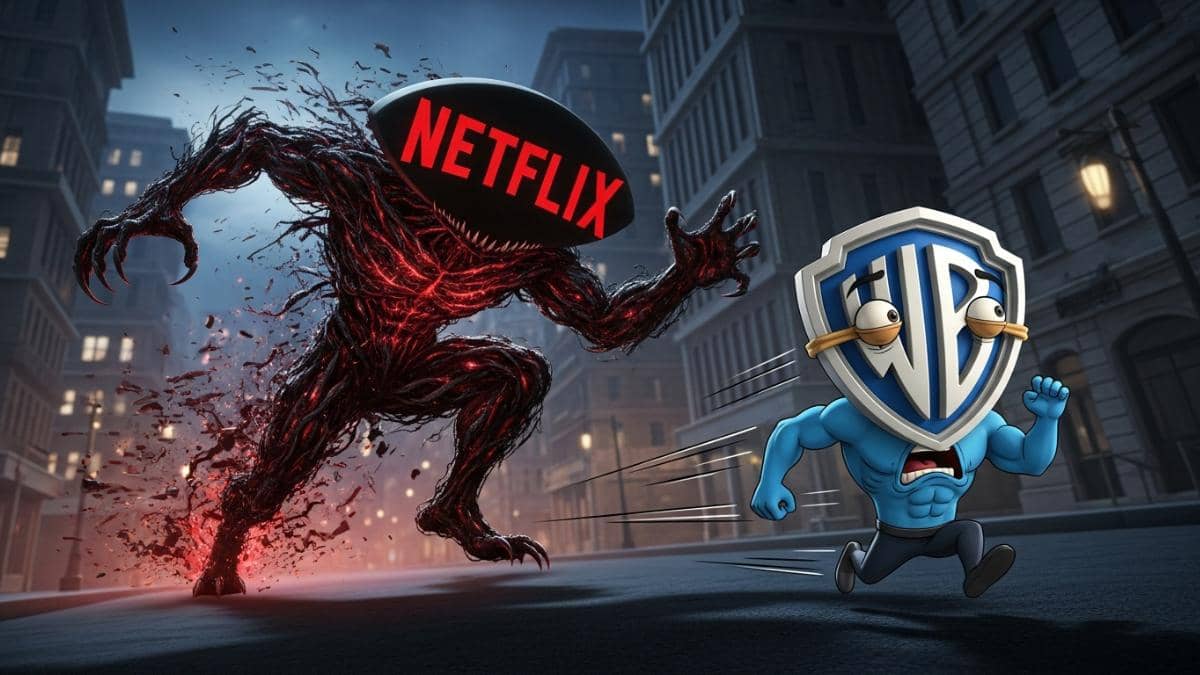
Netflix has agreed to buy Warner Bros. Discovery’s film and TV studios, HBO, and the HBO Max streaming service in a deal worth about $82.7 billion. This is one of the biggest mergers in entertainment history and will make Netflix the strongest company in global streaming.
The agreement values each WBD share at $27.75, with $23.25 in cash and the rest in Netflix stock. Netflix CEO Ted Sarandos says the deal is “a rare chance to bring iconic storytellers to the world’s largest audience.”
WBD Splits Before the Sale
Earlier this year, Warner Bros. Discovery announced it would separate its cable channels—such as CNN and TNT—into a new company called Discovery Global. This spinoff will now happen faster, by the third quarter of 2026, due to pressure from falling cable subscriptions and lower advertising revenue.
Netflix is buying what remains of WBD after the split, including the studios and HBO. The companies expect the merger to close within 12 to 18 months, depending on regulatory approval.
WBD CEO David Zaslav says the move “creates value for shareholders and protects Warner Bros.’ historic brand.”
A Competitive Battle for Control
The deal ends weeks of bidding from major companies. Skydance Media offered an all-cash bid of around $24 per share but lost. Comcast also showed interest but backed away because of antitrust concerns.
Analysts say Netflix gains a major advantage. It will now control HBO’s award-winning library and Warner’s famous franchises, including DC Comics, Harry Potter, and The Lord of the Rings.
What Viewers and Creators Can Expect
The merger will bring big changes to streaming. HBO Max’s 95 million subscribers will join Netflix’s 280 million users. Together, they will form the largest streaming audience in the world.
Viewers may see new crossovers, shared universes, and reboots powered by Netflix’s content budget, which is about $17 billion per year. Creators say the combined resources will open the door to more ambitious projects.
However, regulators in the U.S. and Europe will examine the merger closely. Netflix could gain more than 40% market share in some regions, raising concerns about reduced competition. Unions also worry about possible job cuts at major production locations.
Investors reacted positively. Netflix shares rose 8% in early trading, while WBD shares increased 12%, boosted by the premium sale price and relief over WBD’s heavy debt.
With this deal, the long-running “streaming wars” may finally have a winner. Netflix now stands as the industry’s top power, ready to shape the future of entertainment.