

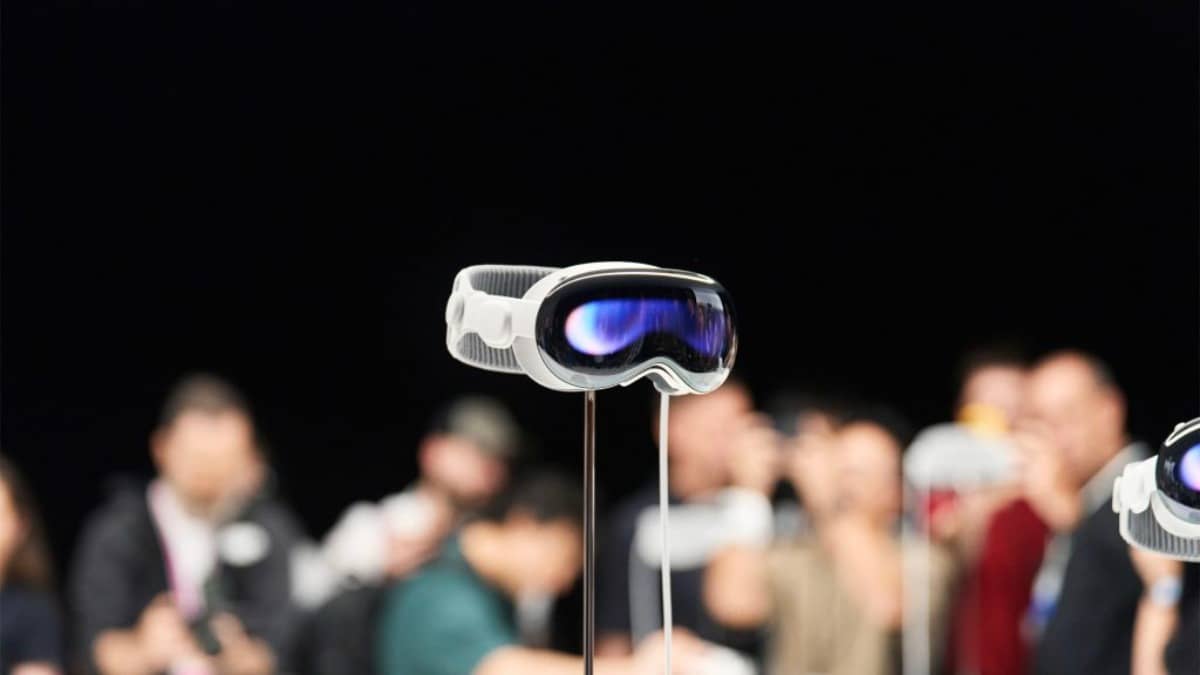
Apple’s Vision Pro is a groundbreaking device, showcasing the company’s most advanced technological achievements.
Yet, for all its innovation, the Vision Pro has inadvertently spotlighted a limitation of Apple’s ecosystem: the absence of Touch ID on the iPhone.
When Face ID debuted in 2017, it quickly became the standard for iPhone authentication, relegating Touch ID to the budget iPhone SE.
Now, with rumors suggesting the SE will soon lose it too, Touch ID’s absence is more apparent than ever—especially for Vision Pro users.
Vision Pro and the Face ID Dilemma
Using an iPhone while wearing a Vision Pro reveals a fundamental issue: Face ID is rendered ineffective when the device obscures the user’s face.
This limitation becomes an everyday inconvenience for Vision Pro owners who still rely on their iPhones alongside the headset.
While Apple has previously introduced software solutions to adapt Face ID—for example, making it compatible with face masks during the pandemic—addressing this issue for Vision Pro users would likely be far more complex. The logical alternative? Reintroducing Touch ID.
Why Touch ID Makes Sense
Touch ID offers distinct advantages, particularly in situations where Face ID is impractical.
Whether embedded under the display or integrated into the power button (as seen on iPads), Touch ID could provide a seamless authentication option for Vision Pro users and beyond.
Reintroducing Touch ID wouldn’t just solve the Vision Pro compatibility issue; it would also offer users more flexibility in how they secure their devices.
A Long-Term Solution
For now, Vision Pro remains an “early adopter product,” as CEO Tim Cook describes it. But as Apple’s spatial computing vision grows, so will the importance of resolving these ecosystem gaps.
Apple is known for its seamless integration across devices, and the Vision Pro-iPhone authentication mismatch feels like an anomaly. Whether through Touch ID or another innovative solution, addressing this issue will be essential as Vision Pro and its successors gain traction.
The iPhone isn’t going away anytime soon, and neither is the need for a versatile authentication system.
Touch ID, whether under-display or power button-based, could be the perfect complement to Face ID, ensuring Apple’s devices continue to work harmoniously.
What do you think? Should Apple bring back Touch ID to the iPhone?











Leave a comment