

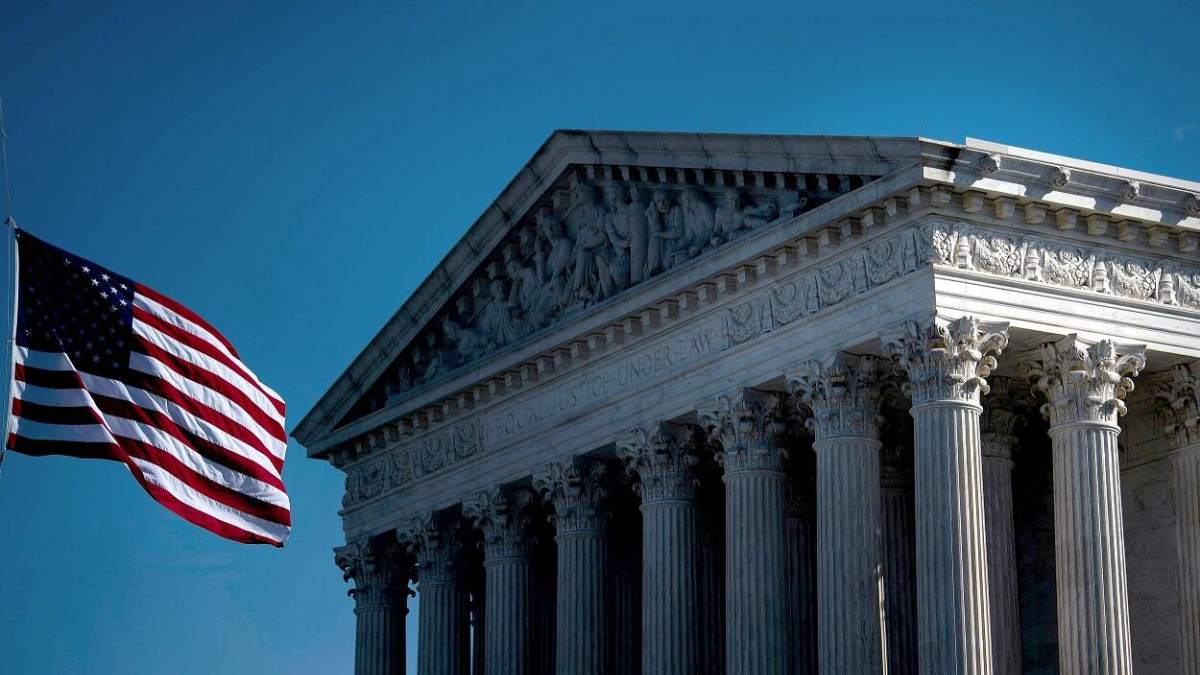
The U.S. Supreme Court did not rule on former President Trump’s global tariffs Monday. Instead, it issued a decision in Bowe vs. United States, a case concerning whether federal prisoners can appeal their sentences directly to the Supreme Court. The case was sent back to a lower court.
Trump used the 1977 International Emergency Economic Powers Act (IEEPA) to impose broad tariffs on most U.S. trade partners, citing national trade deficits and fentanyl trafficking from countries including China, Canada, and Mexico. During arguments in November, justices appeared skeptical of the administration’s authority under IEEPA.
Observers widely expected at least partial invalidation of the tariffs. If struck down, the administration could pursue other legal avenues, including Section 122 of the 1974 Trade Act, which allows temporary tariffs of up to 15% for 150 days. Certain sectoral tariffs, like those on steel and aluminum, are not affected.
Financial analysts said a ruling against the tariffs could reduce trade tensions slightly but might increase uncertainty for U.S. businesses and affect trade deficits. Deutsche Bank and Goldman Sachs noted that while some tariffs may be rolled back, alternative legal frameworks are likely to maintain trade uncertainty.
Meanwhile, U.S. Customs and Border Protection is preparing for a potential ruling. Importers now have until February 6 to submit claims for electronic refunds via ACE (Automated Commercial Environment), a secure portal replacing the previous manual system for ACH refunds.
In addition to the tariff case, the Supreme Court is also considering cases involving the 1965 Voting Rights Act and a Colorado law banning conversion therapy for minors.