

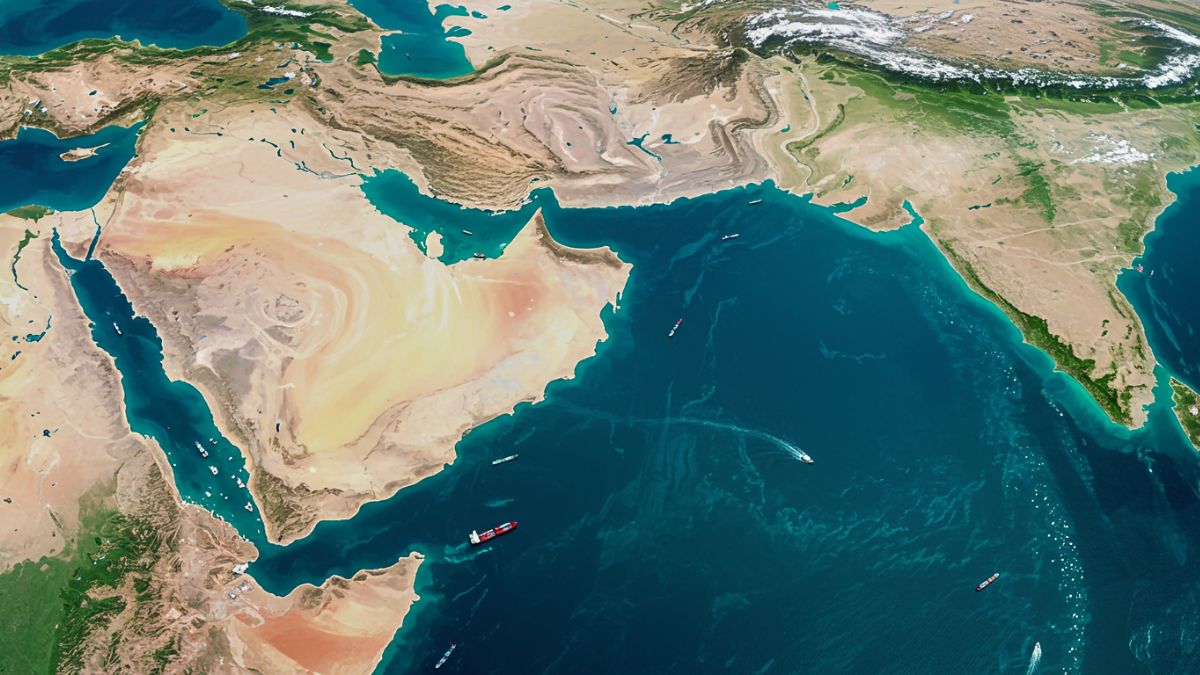
Iran’s Islamic Revolutionary Guard Corps Navy announced the closure of the Strait of Hormuz on Saturday. The warning was reportedly broadcast over maritime radio channels to ships in the area.
Iranian state-linked media, including Tasnim News Agency, reported that no vessels would be allowed to pass. The move follows earlier U.S.-Israeli airstrikes on Iranian targets.
The UK Maritime Trade Operations said it received reports from ships that broadcasts claimed the strait “has been closed.” The U.S. Navy warned that it cannot guarantee safe passage in the Gulf, Gulf of Oman, North Arabian Sea, and the strait itself.
The Strait of Hormuz is one of the world’s most important oil routes. Around 20 to 21 million barrels of oil pass through it each day, along with large volumes of liquefied natural gas, mainly from Qatar.
Following the announcement, major energy firms paused shipments. Some tankers slowed down or changed course near the Gulf of Oman. War-risk insurance costs are expected to rise.
Iran described the move as defensive retaliation. Analysts say a long-term closure would also hurt Iran’s own economy, as it relies on the same route for exports.
There is no independent confirmation yet of physical enforcement such as mines or naval blockades. The situation remains fluid as global markets react and governments call for de-escalation.



 Follow on Google News