
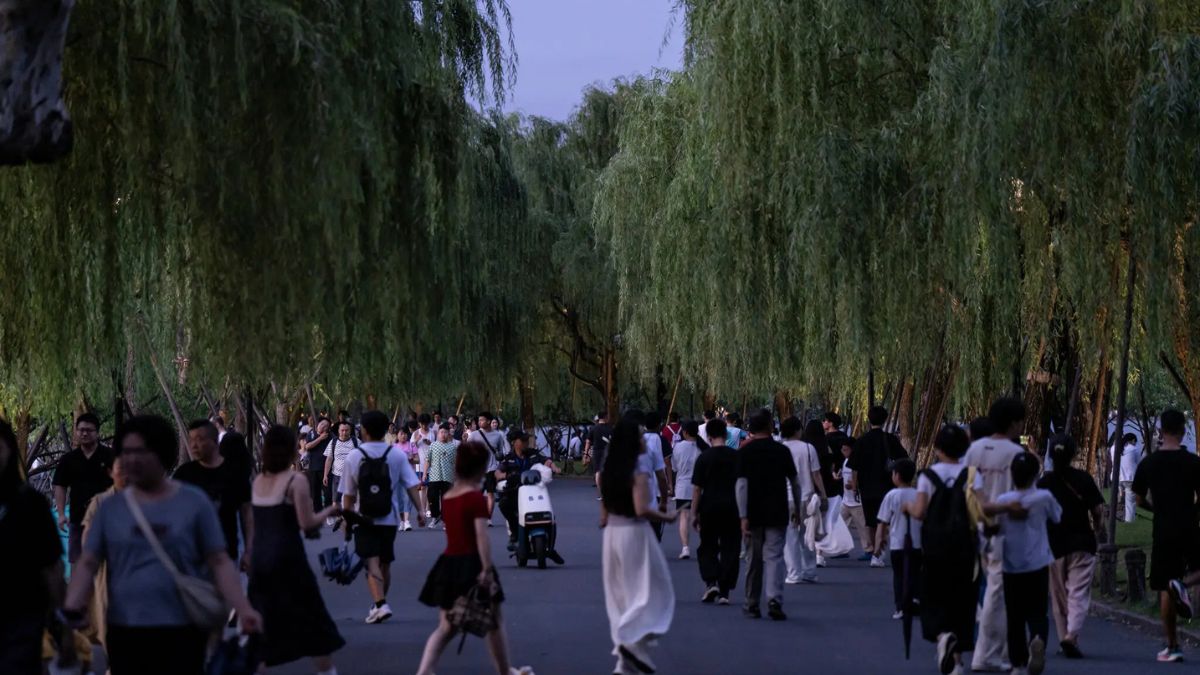
Hangzhou, often called China’s Silicon Valley, is becoming a major center for artificial intelligence. The city hosts advanced research in robotics and chips, while small teams also build playful apps like AI pets and fortune-telling tools.
The mix shows how China’s AI industry is growing fast and in many directions at once. Big companies and startups work side by side as competition increases at home and abroad.
China and the United States are both pushing into “physical AI,” which focuses on machines that interact with the real world. These systems help robots move, power self-driving cars, and simulate real-world events. China has named this area, also called “embodied intelligence,” as a national priority in its next Five-Year Plan.
In Hangzhou, startups such as Unitree, Deep Robotics, and Manycore are leading this push. Several of them plan to list their shares in Hong Kong or mainland China. These companies train AI not only on text and images, but also on physical data like weight, force, temperature, and movement.
Manycore co-founder Victor Huang says China benefits from lower electricity costs. Cheaper power can help offset the use of less advanced computer chips. He adds that energy supply, data quality, and location matter as much as raw chip power.
Many Chinese AI firms also favor open-source models. This approach allows more users to test and improve the technology, though it brings less direct income. Investors often push back, but founders say the feedback is valuable.
China’s AI market focuses more on practical tools than on distant ideas like artificial general intelligence. Apps such as ByteDance’s AI assistant Doubao show this trend. In December, Doubao was China’s most used AI app, suggesting users care more about usefulness than technical complexity.
Alongside big firms, a more experimental scene is growing in a Hangzhou suburb called Liangzhu. Small teams there build niche apps, from fitness games to tools for emotional support. One founder is even developing an AI based on traditional Chinese divination.
Low costs and low pressure attract young developers to Liangzhu. Regular demo events now draw investors, pushing some founders to think beyond China. Many hope to sell products overseas using China’s strong hardware supply chains.
As competition grows and users resist paying for apps, global markets look more appealing. While not every idea will succeed, Hangzhou’s AI scene shows how China is testing everything—from serious robotics to playful software—in a fast-moving tech race.




 Follow on Google News