

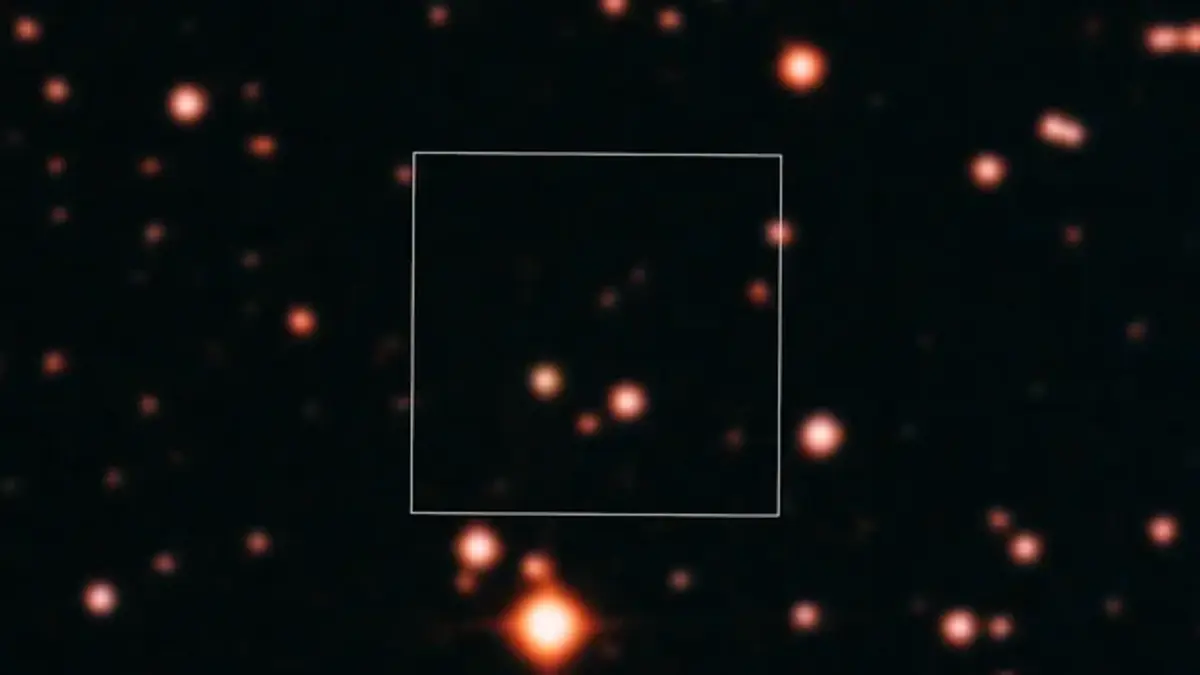
Astronomers have discovered a powerful shockwave around a white dwarf star, challenging current understanding of stellar physics.
The star, RXJ0528+2838, is a dead star located about 730 light-years from Earth. Observations at the Very Large Telescope (VLT) in Chile revealed a massive, bow-shaped cloud of glowing gas surrounding it.
Normally, such structures form around active stars with a disc of material. But RXJ0528+2838 shows no disc, making the discovery a rare and unexpected phenomenon. Scientists described the finding as a “wow” moment in astrophysics.
Earlier hints came from data collected by the Isaac Newton Telescope in Spain, but follow-up studies with the VLT confirmed the bow-shaped shockwave is truly part of this system.
Researchers suggest that strong magnetic fields may funnel material onto the white dwarf without forming a disc. However, the size and duration of the shockwave—estimated at nearly 1,000 years—indicate that an unknown energy source is driving the outflow.
The discovery has sparked discussions in the scientific community about how dead stars interact with their surroundings and could force a rethink of current stellar evolution models.
Future studies with next-generation large telescopes aim to find similar systems, which could reveal the hidden mechanisms behind these mysterious shockwaves.







 Follow on Google News