
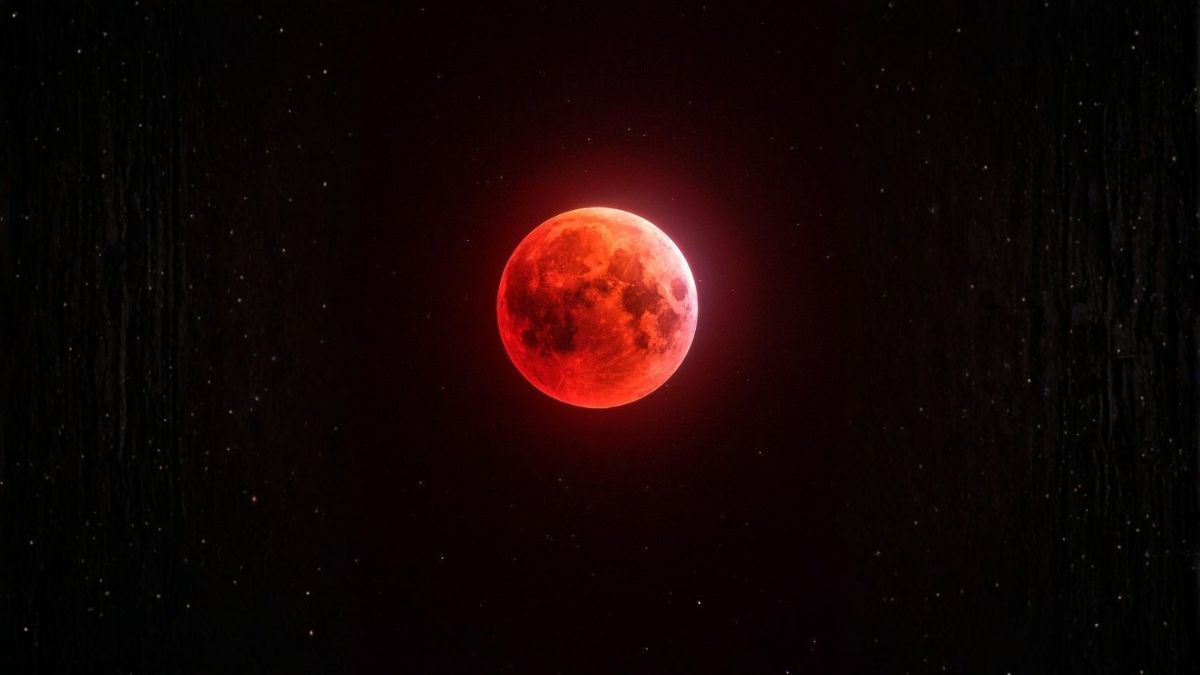
A total lunar eclipse, often called a “Blood Moon”, will be visible across large parts of the world on 3 March 2026, turning the Moon a deep red as it passes into Earth’s shadow.
The eclipse is expected to be visible to around 5.6 billion people, including observers in eastern Asia, Australia, the Pacific islands and much of the Americas, according to astronomers.
The event will last more than five hours, though the most dramatic phase — totality — will last just under an hour. During this period, the Moon will be completely covered by Earth’s shadow, giving it a copper-red colour.
The red colour occurs because sunlight passing through Earth’s atmosphere is bent towards the Moon. Blue light is scattered away, while red and orange wavelengths reach the lunar surface, a process similar to how sunsets appear red on Earth.
The best views of the full eclipse are expected from Australia, Hawaii and the central Pacific. In North America, the event will take place in the early morning, while parts of Asia and Australia will see it after moonrise.
Astronomers say no special equipment is needed, as lunar eclipses are safe to watch with the naked eye, unlike solar eclipses.