

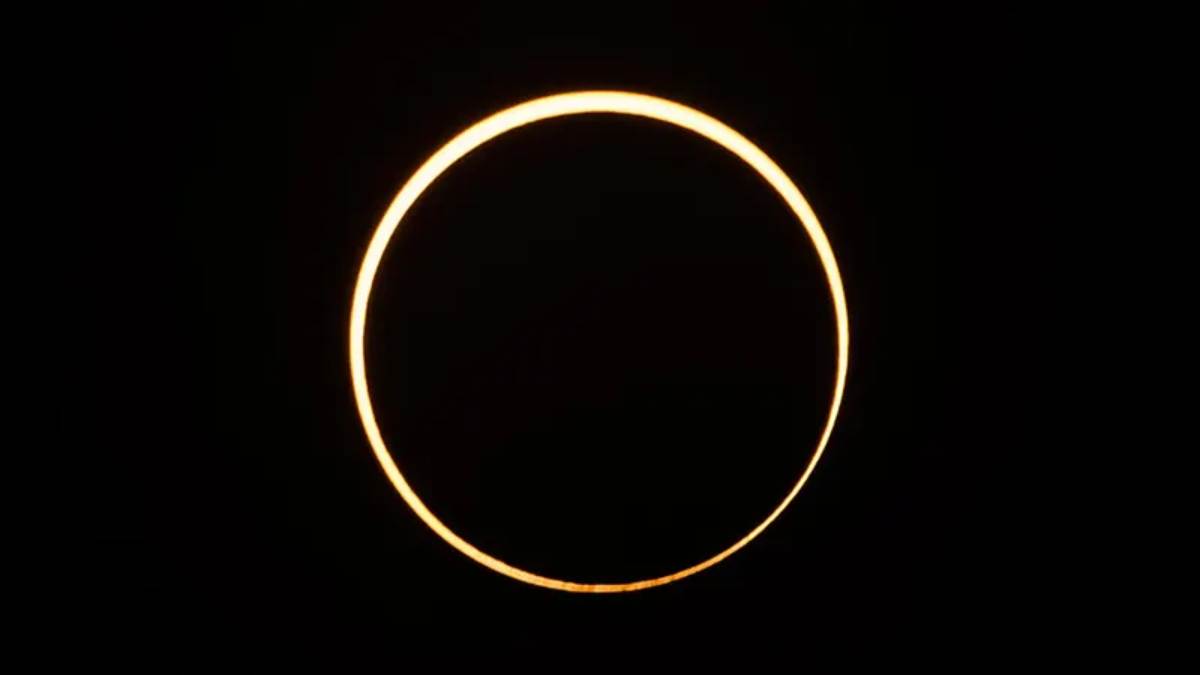
On Tuesday, February 17, 2026, a rare annular solar eclipse, also called a “ring of fire,” will occur over Antarctica. During this event, the moon will pass directly in front of the sun but will not completely cover it, creating a bright ring of sunlight.
The ring of fire will last about 2 minutes and 20 seconds at its peak. Only a few research stations in Antarctica, such as the European Concordia and Russian Mirny stations, will witness the full annular phase. The sun will be very low on the horizon, making observation challenging but rewarding.
This type of eclipse occurs when the moon is too far from Earth to fully block the sun. Observers will see a glowing ring around the moon instead of complete darkness, unlike a total solar eclipse.
While only a handful of people in Antarctica will see the full effect, a partial solar eclipse will be visible across southeastern Africa, the southern tip of South America, and remote islands like Heard Island, Reunion, and Mauritius. Cities like Durban, Antananarivo, and Maputo will see 12–20% of the sun covered. All viewers must wear proper solar eclipse glasses.
Future annular eclipses include:
- Feb. 6, 2027 – South America and parts of West Africa
- Jan. 26, 2028 – Ecuador, Peru, Brazil, Morocco, and Spain
- June 1, 2030 – North Africa, Europe, and Asia
The next total solar eclipse will occur on Aug. 12, 2026, visible in eastern Greenland, western Iceland, and northern Spain. U.S. viewers will only see a small partial eclipse that day. The next major U.S. total eclipse won’t happen until Aug. 23, 2044, with a coast-to-coast total eclipse arriving Aug. 12, 2045.
This rare “ring of fire” eclipse offers a unique opportunity for scientists and adventurous skywatchers, even if only a few will witness it firsthand.







 Follow on Google News