
The year 2030 is no longer a distant milestone — it’s just around the corner. From artificial intelligence reshaping entire industries to healthcare becoming predictive rather than reactive, the world is on the brink of a transformation unlike anything we’ve seen before.
But what will life actually look like? Below is a comprehensive, source-backed look at the trends, breakthroughs, and tensions that experts say will define the next chapter of human life.
▶ Table of Contents
1. TECHNOLOGY
AI Becomes Invisible Infrastructure
AI will feel so normal you won’t even call it “AI” anymore — you’ll just say, “Yeah, my system handles that.” By 2030, AI and machine learning will be fully embedded in daily routines, and AI is projected to contribute nearly $15 trillion to the global economy, transforming how we work, learn, stay healthy, and interact with the world.
Agentic AI & Personal Assistants
Agentic AI could revolutionize efficiency — autonomously streamlining supply chains, preempting patient health issues with targeted interventions, managing energy grids smartly, maximizing agricultural yields, and forecasting consumer behaviors.
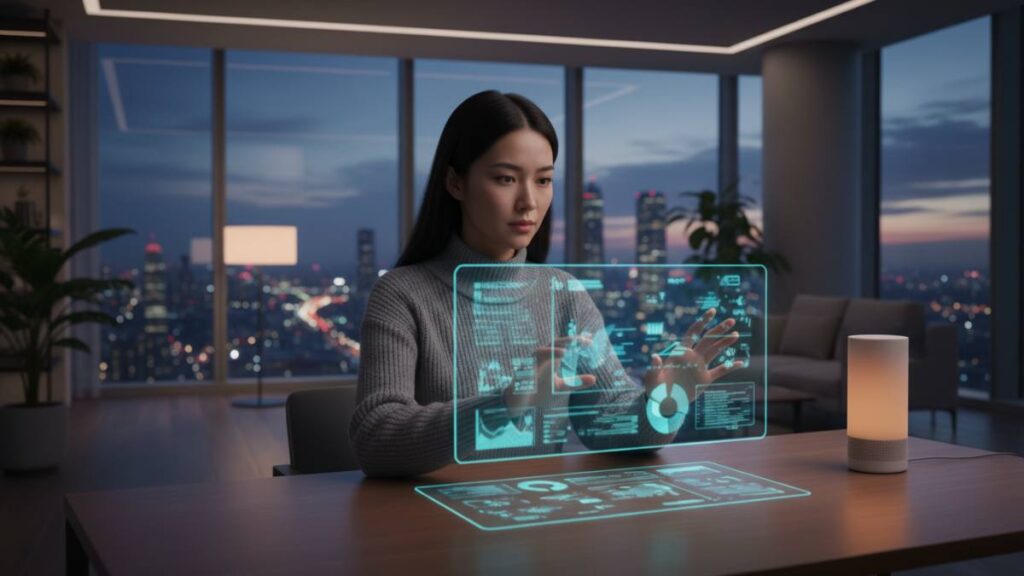
Your AI assistant will know your preferences, your style, your goals. It’ll help you draft emails, plan your week, research topics you’re curious about, and even coach you through difficult conversations.
Humanoid Robots Begin to Scale
Labor shortages caused by long-term demographic shifts, along with advances in large-language models and generative AI, are expected to drive the development of humanoid robots. These advanced robots with AI-powered “brains” could reach 63 million units by 2050, potentially impacting $3 trillion in wages, especially in farming, food preparation, logistics, and manufacturing.
Autonomous Vehicles on the Road
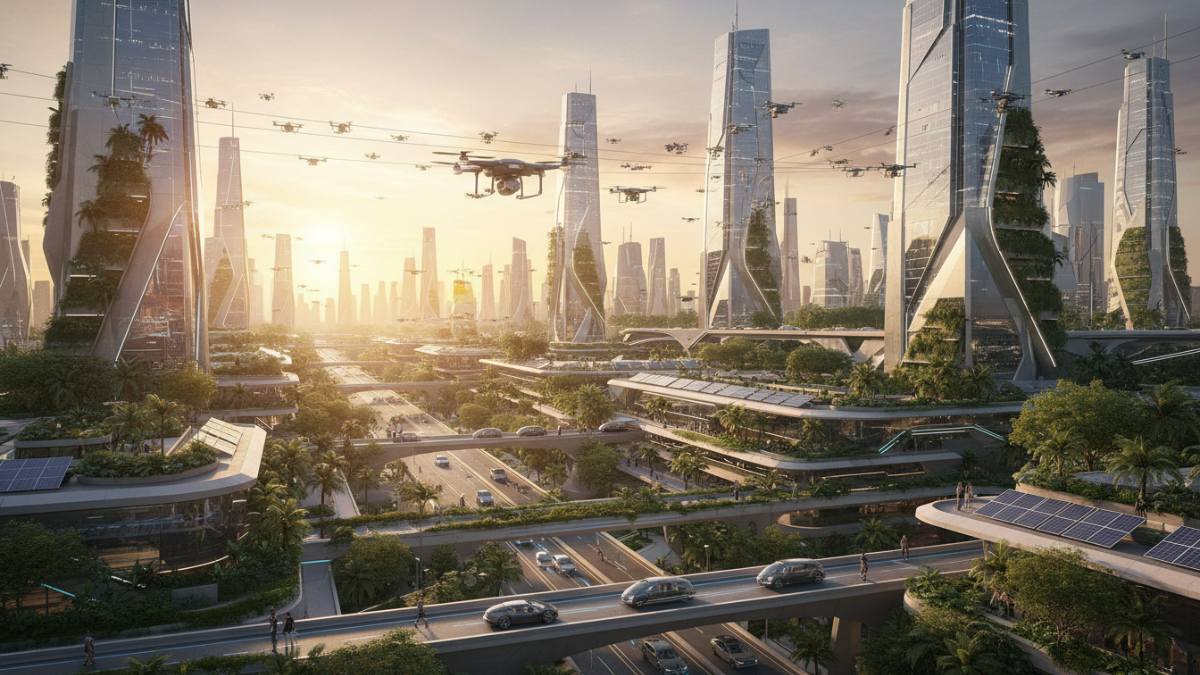
Analysts think the first fully automated vehicles could be on the road by 2030, and by 2050 could be logging more miles travelled than partially automated versions.
6G & Hyper-Connectivity
By 2030, 6G technology is expected to emerge, delivering speeds 100x faster than 5G. Cisco predicts that by 2030, there will be 29.3 billion connected devices, transforming healthcare, agriculture, and industry.
Quantum Computing Matures
Quantum technology’s long-promised delivery is finally coming, and will be highly disruptive. Far more efficient than classical computers, quantum tech will be able to run solutions and solve problems that will lead to major advancements in aerospace, automotive, chemicals, finance, pharmaceuticals, and more.
AR Glasses May Challenge Smartphones
By 2030, AR glasses could replace smartphones for many daily tasks, blending digital information seamlessly into the physical world and opening up entirely new ways of interacting with technology.
AI Advances Battery & Climate Tech
Improving batteries has always been hampered by slow experimentation. AI is currently being used to advance battery development and make this process faster — essential for more efficient electric vehicle batteries. Alongside that, expect growth in renewable energies, drought-resistant crops, early warning systems, sustainable fuels, carbon removal tech, and sea walls.
Global Investment Surge
According to the World Economic Forum’s 2024 report, global investment in transformative tech is projected to exceed $3.5 trillion annually by 2030. This surge reflects a collective bet that innovation will drive economic growth and address challenges like climate change, aging populations, and resource scarcity.
2. HEALTHCARE
From Reactive to Predictive & Preventive
The advancements ahead won’t just treat symptoms — they will intervene at the root cause, often before symptoms appear, reorienting our healthcare system from reactive to proactive and from one-size-fits-all to personalized care. Multi-omics sequencing will push diagnostics beyond detection into true prediction, uncovering disease at its earliest and most curable stage.
Gene Therapy & Precision Medicine
Gene therapies are beginning to replace lifelong symptom management with one-time cures that strike at the root of disease. Precision medicine programs are poised to scale rapidly, replacing “one-size-fits-all” standards with personalized treatment. Drug development has drastically changed, with over half of the 8,000 drugs in development having the potential to become personalized treatments.
AI Transforms Diagnostics & Drug Discovery
Machine learning algorithms are now being used to assist in the interpretation of pathology, radiology, and dermatology imaging, with some models approaching or matching the accuracy of the world’s best human experts. Large pharma’s investment in AI drug discovery could compress decades of research into years, delivering breakthrough therapies that were previously thought to be impossible.
Care Shifts to the Home
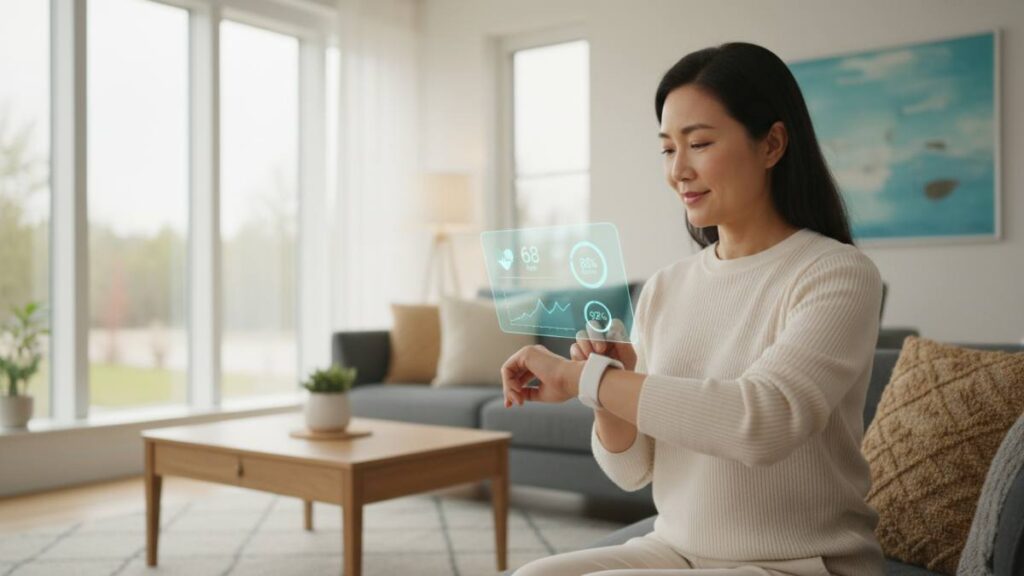
The traditional hospital model is shrinking in scope, evolving into specialized hubs for trauma, surgery, and acute care, while the bulk of routine and chronic care shifts to the home — delivered through remote monitoring devices, AI-driven virtual assistants, and hospital-at-home programs. The predicted market size for patient engagement solutions is $74.3 billion for 2030, up from $13.4 billion in 2021.
Digital Twins & Continuous Monitoring
As digital twin adoption grows, doctors won’t just treat patients after something goes wrong — they’ll run real-time simulations of a patient’s unique physiology to predict risks, personalize interventions, and prevent illness. Wearable devices will continuously monitor vital signs, sleep quality, stress levels, and metabolic markers, making medicine in 2030 focused less on curing illness and more on preventing it entirely.
An Aging Population Reshapes Demand
By 2030, 20% of the U.S. population will be 65 or older, and the 85+ group is projected to more than double by 2040. To meet these growing needs, healthcare providers must expand and adapt their services to support this demographic shift.
Robots Enter the Operating Room & Home
Soon, doctors will interact with patients not just through video calls, but via robotic devices. Remote surgery — where doctors operate on patients miles away — is the future. Robotics will also transform home care, easing caregiver burdens for aging populations.
3. DAILY LIFE
AI Assistants Manage Your Day
By 2030, your daily routines will look remarkably different. The way you work, learn, stay healthy, and even decide what’s true will all be transformed by AI. Innovations expected to reshape daily life include personal AI life coaches tailoring advice for fitness, finance, and career decisions; autonomous household robots; and next-generation wearables monitoring health metrics with advanced sensors.
Work Changes More Than It Disappears
AI will disrupt work — but not in the sudden, catastrophic way many fear. Repetitive and predictable tasks will be automated first: data entry, basic customer support, warehouse sorting, and routine accounting. But in most professions, AI will enhance human performance rather than replace it. According to the World Economic Forum, more than 44% of core job skills may change by 2027 due to automation and digital transformation.
Smart Homes Become Mainstream
Imagine this: your IoT bedroom opens solar-powered e-windows and plays gentle music. Your shower recycles grey water and puts excess heat back into your home’s operating system. Your AI assistant shares your schedule. Your IoT refrigerator provides a coffeehouse experience at home. The smart home won’t be a luxury — it’ll be the new normal.

Payments Go Fully Digital
Even the use of credit and debit cards will fade fast by 2030. Most transactions will be electronic, with your bank account information stored in your mobile smart device. Financial dealings on mobile devices will be secured by advanced biometrics, such as voice, fingerprint, and face recognition.
Learning Becomes Lifelong & Personalized
Whatever you want to learn — a new language, a musical instrument, cooking, home repair — AI will personalize the learning path to how you specifically learn best. It’ll adjust pace based on your progress, provide explanations in ways that click for you, and give you practice opportunities tailored to your skill level.
Climate-Driven Migration Reshapes Where People Live
By 2030, millions will move not for jobs but for survival, stability, and livability. Real estate will see the biggest redistribution of value in a century. Entire regions will decline. Others — cooler, safer, more resilient — will quietly boom. For the first time in history, climate may outrank career in relocation decisions.
Deepfakes Force a Trust Revolution
Deepfakes will be indistinguishable from reality. AI-generated content will be so sophisticated that current methods of detection won’t work. But the response is already underway — companies are developing AI detection tools, digital watermarking systems, and blockchain-based authentication. By 2030, we’ll likely have standardized ways to verify the authenticity of content.
Global Goals & Milestones
Targets of the UN’s 2030 Agenda are set for this year. The Glasgow Climate Pact aims to reduce global CO₂ emissions by 55% by 2030 relative to 2010 levels — however, based on existing pledges, emissions in 2030 will be 14% higher than in 2010.
The international community, including the United Nations, World Bank, and the United States, have set the goal of completely eradicating extreme poverty by 2030. The United Nations has also made it a goal that Internet access and literacy will be universal by 2030.
4. THE BIG TENSIONS
| Opportunity | Risk |
|---|---|
| AI boosts productivity & creativity | Job displacement hits hardest before new roles emerge |
| Healthcare becomes predictive & personal | Access remains unequal; costs may stay high |
| Smart cities optimize energy & transit | Surveillance and privacy concerns grow |
| Climate tech scales up | Emissions targets are likely to be missed |
| Information becomes abundant | Deepfakes erode trust in media |
If companies sustain newfound speed and agility, more innovation could happen in the next ten years than in any previous decade in modern history. Life in the 2030s could be vastly different from today.
Bottom Line
Technology: AI everywhere, quantum and 6G emerging, robotics scaling in key industries.
Healthcare: Shift from treatment to prevention; gene therapy, AI diagnostics, and care-at-home models.
Daily life: Smarter, more personalized, more convenient — but also more surveilled and harder to navigate without digital literacy.
The world of 2030 won’t arrive with a single dramatic moment. It will creep in through smarter notifications, quieter hospitals, invisible algorithms, and choices you didn’t realize were being made for you. The question isn’t whether the future is coming — it’s whether we’ll shape it, or just let it happen.