

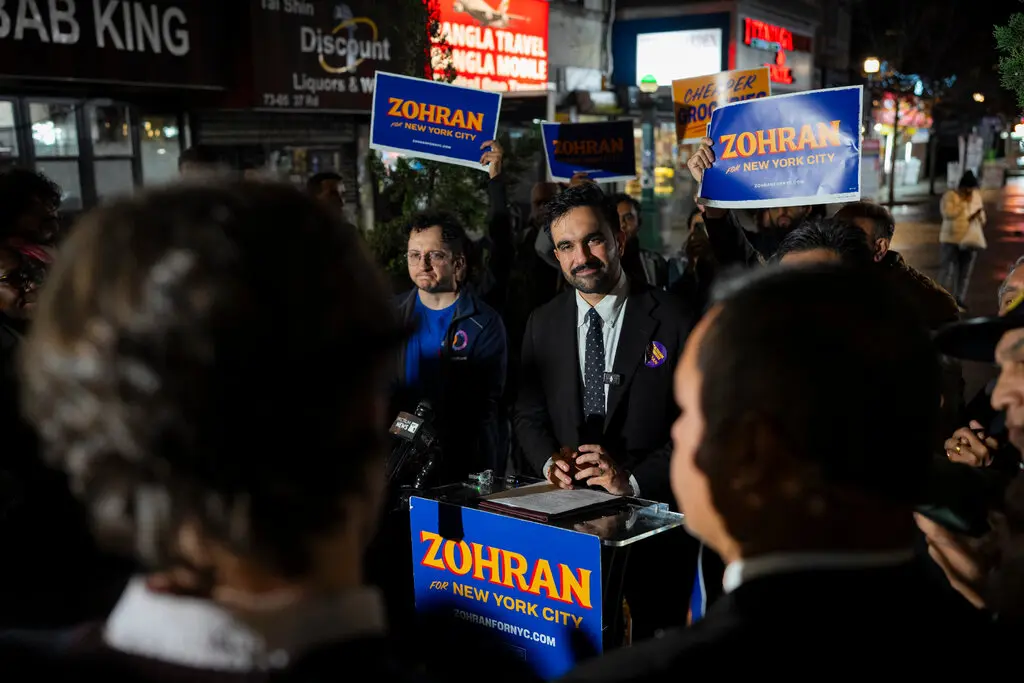
New York City Mayor Zohran Mamdani’s inaugural speech is drawing criticism, with opponents warning that his rhetoric could weaken civil discourse and public debate.
In a commentary published by RealClearPolitics, author Charles Mitchell highlighted a remark Mamdani made during his Jan. 1 inauguration, in which the mayor said those who are “fluent in the good grammar of civility” often use decorum to hide “agendas of cruelty.”
Mitchell argued that the statement implies respectful debate may be treated as suspect, rather than as a core democratic value. He said the language suggests Mamdani’s administration may view disagreement as moral wrongdoing.
The commentary linked Mamdani’s remarks to ideas common in modern higher education. Mitchell noted that many campuses now portray civil discourse as a tool of oppression rather than a shared civic norm.
He cited a December survey by the free‑speech group FIRE, which found that 90% of undergraduates believe words can constitute violence, and about one‑third support using force to stop speech they oppose.
According to Mitchell, Mamdani’s election marks the first time this mindset has moved from classrooms into major political power. He said the mayor’s strongest support came from young voters shaped by campus activism.
The commentary also raised concerns about antisemitism, arguing that abandoning civil discourse has already led to real‑world consequences. Mitchell said Jewish students and speakers increasingly require security to express their views openly.
Mitchell warned that discarding civil discourse threatens everyone, not only specific communities. He said the erosion of respectful debate increases polarization and weakens social trust.
The article called for higher education reform, pointing to new civics programs launched in states including Texas, Florida, and Ohio. Mitchell argued that restoring civil discourse is essential to preserving democratic self‑government.

 Follow on Google News


