
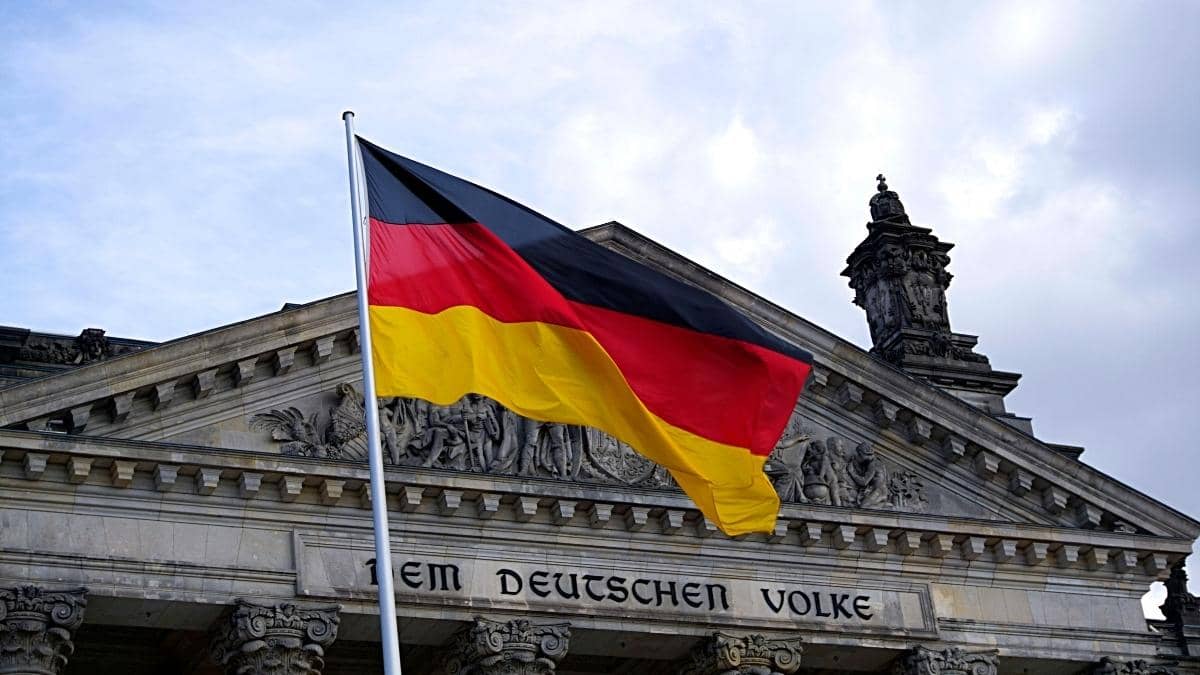
Germany may be moving toward a more centrally coordinated economic model as defense spending and arms production expand, according to comments by Moritz Schularick, president of the Kiel Institute for the World Economy.
In an interview with Neue Osnabrücker Zeitung, Schularick said Germany lacks strong leadership in defense policy and called for faster and more coordinated arms production across Europe.
Defense as Industrial Policy
Schularick argued that defense production could play a larger role in stabilizing Germany’s economy. He said increased arms manufacturing could support jobs and industrial capacity at a time when traditional sectors are under pressure.
“If Europe wants to stand on its own militarily and not remain dependent on the United States,” Schularick said, Germany’s defense ministry should work more closely with European partners to expand production.
He pointed to ongoing security risks from Russia as a reason for faster action.
Calls for Central Coordination
Schularick criticized the slow pace of Germany’s defense output. He noted that years into the war in Ukraine, production volumes of key systems remain low.
He suggested appointing a high‑level coordinator to manage defense investment and oversee industrial expansion. Germany and its partners have announced plans to invest hundreds of billions of euros in defense by the end of the decade.
Supporters of this approach argue that such coordination is necessary to close capability gaps and reduce reliance on non‑European suppliers.
Concerns About Central Planning
Critics warn that expanding state‑directed industrial policy risks weakening market incentives and diverting resources away from civilian sectors. They argue that converting existing industrial capacity—such as automotive production—into military manufacturing is more complex than policymakers assume.
Some economists also question whether increased defense spending can address Germany’s broader economic challenges, including weak productivity growth, high energy costs, and heavy regulation.
Broader Economic Context
Germany’s economy has struggled with rising costs following the energy crisis, declining global competitiveness in key industries, and weaker export growth. At the same time, the European Union has promoted more active industrial policy, including subsidies and coordinated investment.
Defense has increasingly become part of that strategy, especially as European governments reassess security assumptions after Russia’s invasion of Ukraine.
Strategic Debate Continues
Supporters of stronger defense production argue it is necessary for security and geopolitical stability. Opponents warn that a long‑term shift toward military‑led growth risks creating dependency on state funding and reducing economic flexibility.
The debate highlights growing tension in Germany and across the EU between market‑based economics and greater state involvement in strategic industries.
For now, calls for expanded defense coordination reflect the changing priorities of European governments as security concerns increasingly shape economic policy.





 Follow on Google News