



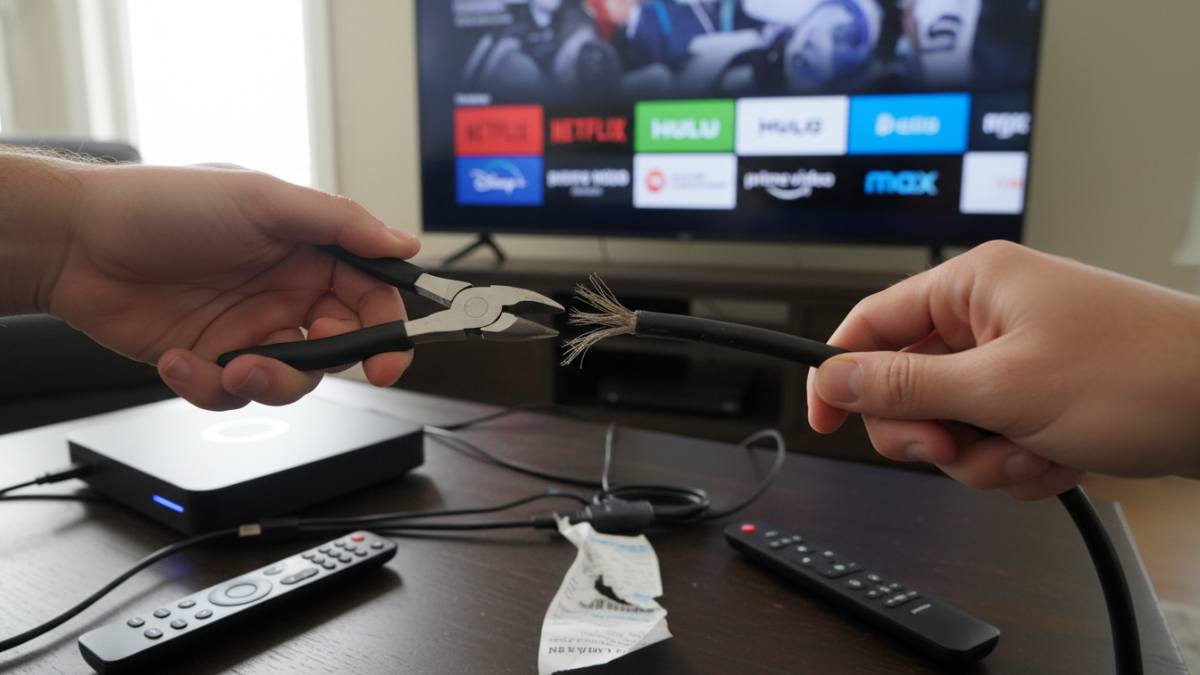
Cable TV continues to become more expensive, while more viewers are shifting toward free, legal streaming platforms. These services offer live TV channels, movies, and on-demand shows without subscription fees, funded mainly through advertising or public libraries.
Below are the most reliable legal alternatives to cable TV in 2026.
1. Pluto TV
Pluto TV is one of the closest experiences to traditional cable television in the free streaming space.
It offers hundreds of live channels across categories such as news, sports, movies, reality TV, and entertainment. The interface is designed like a traditional TV guide, allowing users to switch channels in real time.
Unlike many streaming apps, Pluto TV does not require registration. You can open it and start watching immediately. This makes it especially popular for casual viewing and background TV.
2. Tubi
Tubi combines live TV channels with a large on-demand library of movies and shows.
It hosts tens of thousands of titles across genres including action, drama, comedy, anime, and documentaries. The live TV section includes news, entertainment, and sports channels.
Tubi also uses a recommendation system that improves over time based on viewing behavior, making discovery easier as you use it more. It works on almost every device, including smart TVs, phones, and browsers.
3. The Roku Channel
The Roku Channel has become a major free streaming platform, even for users without Roku devices.
It offers live TV channels, on-demand movies, and Roku Originals. The live section includes news, entertainment, and finance content.
One of its strengths is content aggregation, bringing together free movies and shows from multiple sources into one interface, reducing the need to switch between apps.
4. Sling Freestream
Sling Freestream is the free, ad-supported version of Sling TV.
It offers hundreds of live channels covering news, sports, lifestyle, and children’s programming. Because it is backed by an established live TV company, it generally provides stable streaming quality.
While paid upgrades are available, the free version works without any subscription or payment details.
5. Xumo Play
Xumo Play is a free streaming service owned by major media companies.
It provides more than 300 live channels, including news, sports, and entertainment. The service is often pre-installed on smart TVs, making it easy to access without downloads.
Its simple interface focuses on fast navigation and traditional channel surfing.
6. Plex
Plex is a hybrid platform combining free streaming and personal media management.
It offers live TV channels, on-demand movies, and curated collections. Users can also integrate their own media library into the same system.
Its “Discover” feature helps users find free content across multiple platforms in one place.
7. Crackle
Crackle is a long-running free streaming service supported by ads.
It offers movies, TV shows, and original content. While its catalog is smaller than larger competitors, it remains a simple, no-cost option for casual viewing.
8. Kanopy
Kanopy is a library-based streaming service available through public libraries and universities.
With a valid library card, users can stream and download high-quality films, including award-winning cinema and documentaries. It is completely ad-free.
Kanopy is especially known for its educational and critically acclaimed film selection.
9. Hoopla
Hoopla also works through public library memberships.
It allows users to borrow digital movies, TV shows, audiobooks, and more. Many titles can be downloaded for offline viewing depending on library limits.
It functions like a digital lending system, similar to borrowing physical books.
10. Over-the-Air (OTA) TV
Over-the-Air TV uses a simple digital antenna to receive free broadcast signals.
This includes major networks like ABC, CBS, NBC, FOX, and PBS, along with local news, sports, and additional subchannels featuring classic TV content.
Unlike streaming services, OTA TV delivers uncompressed HD signals with no internet required.
What You Still Miss Compared to Cable
While these services cover most everyday viewing needs, there are still differences compared to traditional cable TV:
- Premium channels like HBO and Showtime are not included
- Full access to all live sports (especially regional networks) is limited
- DVR recording features are minimal or unavailable
- Content libraries may rotate or change without notice
- Some live events may be restricted by region
However, for general entertainment, news, and casual viewing, free services now cover a large portion of what cable once provided.
How to Set Up a Free Cable Replacement
Building a free TV setup is simple and can be done in a few steps:
Step 1: Add an antenna
Start with OTA TV to access local channels and live sports without internet dependency.
Step 2: Install 2–3 FAST apps
Apps like Pluto TV, Tubi, and Xumo Play form a strong base for live channels and on-demand content.
Step 3: Use a streaming device or smart TV
Devices like Roku, Fire TV, or modern smart TVs bring everything into one interface.
Step 4: Optional search tools
Platforms like JustWatch or Reelgood can help you find where specific content is available for free.
Final Thoughts
Free cable TV alternatives in 2026 are now a fully mature ecosystem. Platforms like Pluto TV, Tubi, and Plex provide extensive live channels and on-demand libraries without subscription fees.
While they may not fully replace premium cable for heavy sports or exclusive content, they are more than enough for most everyday viewing needs.
For many households, combining an antenna with a few free streaming apps can completely replace traditional cable—legally, safely, and at no monthly cost.