



You’ve probably seen apps like Tubi, Pluto TV, Plex, or Freevee show up in streaming conversations. They often get described as “free Netflix alternatives,” but that label is misleading.
A better way to understand them is this: they belong to a system called FAST streaming. Let’s break it down clearly.
FAST = Free Ad-Supported Streaming Television
FAST stands for:
- Free — No subscription fee required to watch content
- Ad-Supported — Content is funded through advertisements
- Streaming Television — Video delivered over the internet instead of traditional broadcast signals
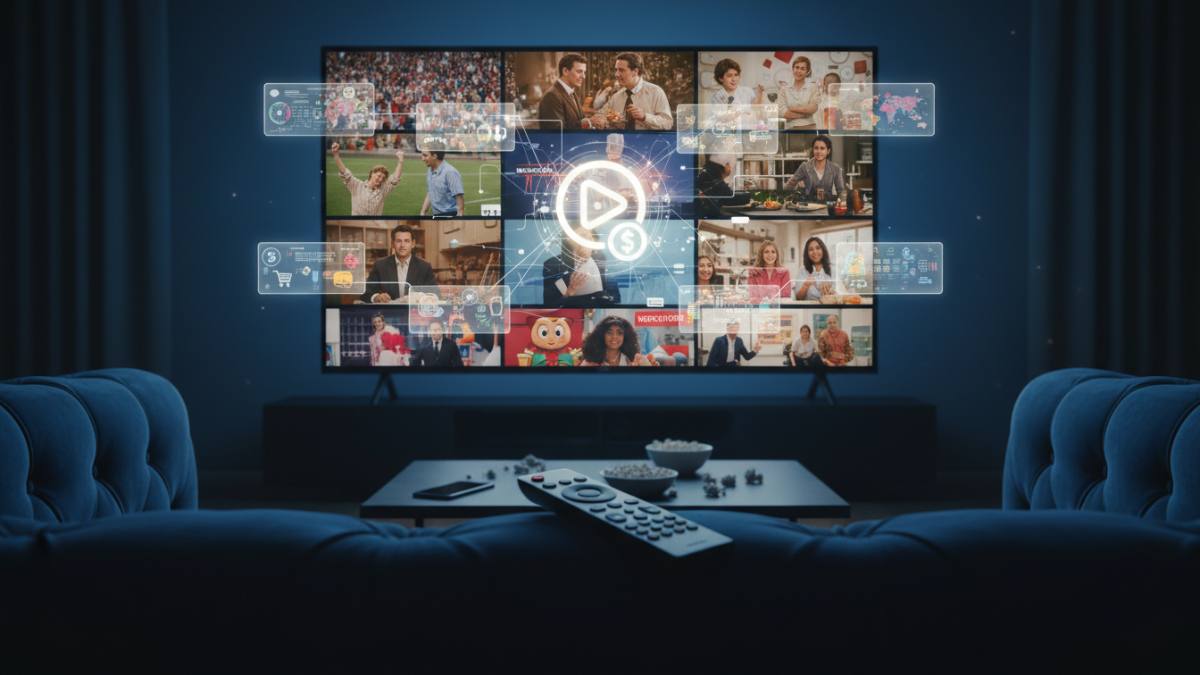
In simple terms: FAST is a modern version of traditional TV, but delivered through apps instead of antennas or cable boxes.
How FAST Differs From Other TV Models
To understand FAST properly, it helps to compare it with other common viewing models:
| Model | Cost | Content Style | Examples |
|---|---|---|---|
| Subscription Streaming (SVOD) | Paid monthly | On-demand, ad-free (usually) | Netflix, Disney+ |
| Ad-Supported Streaming (Hybrid) | Lower subscription + ads | On-demand | Hulu (ads), Netflix Ads tier |
| Traditional Broadcast TV | Free | Scheduled programming via antenna | Local TV channels |
| FAST Streaming | Free | Mix of live-style channels + on-demand | Tubi, Pluto TV, Plex, Freevee |
FAST sits closest to traditional broadcast TV—but delivered over the internet instead of radio waves.
Why FAST Uses “Channels”
One of the most confusing parts for new users is that FAST platforms often include channels, even though they are apps.
There are two main viewing styles:
1. Linear (Channel-Based) Viewing
These are continuous streams that run 24/7, similar to traditional TV.
Examples:
- “Crime Documentaries Channel”
- “Classic Sitcoms Channel”
- “Action Movies Channel”
You don’t choose specific episodes—you simply join the stream and watch whatever is currently playing.
2. On-Demand Libraries
Most FAST platforms also include a searchable library where you can pick specific movies or shows at any time.
This hybrid model is one of FAST’s key strengths: it blends TV-style browsing with modern on-demand control.
Where FAST Content Comes From
FAST platforms generally do not focus on expensive new productions. Instead, their content comes from:
1. Licensed Library Content
Older films and TV shows that are no longer tied to exclusive streaming deals. These are often cost-effective for platforms to license.
2. Niche Content Libraries
This includes categories like:
- Classic television
- True crime
- Anime collections
- International films
These are often too specialized for premium subscription services but still have strong audiences.
3. Low-Budget Originals
Some FAST platforms now produce original content, typically lower-budget films or genre-focused series (especially horror or action). These are primarily used to attract and retain viewers.
How Ads Work on FAST Platforms
Ads are the trade-off for free access.
However, FAST advertising typically differs from traditional cable TV:
- Ad breaks are usually shorter than cable television
- Total ad time is generally lower per hour than broadcast TV
- Ads may be partially personalized based on region and viewing behavior
- Frequency and format vary depending on the platform
In general, FAST platforms aim to keep ad experience lighter than traditional television to encourage longer viewing sessions.
Why FAST Is Growing Quickly
FAST has expanded rapidly due to a combination of economic and industry shifts:
- Low entry barrier for viewers (no subscription required)
- Lower content costs compared to producing originals
- Strong demand from advertisers shifting away from traditional TV
- Large libraries of existing content available for licensing
Many major media companies now operate or distribute through FAST platforms, including:
- Paramount (Pluto TV)
- Fox (Tubi)
- Amazon (Freevee)
- Warner Bros. Discovery (licensing partnerships across platforms)
Limitations of FAST Streaming
While useful, FAST platforms do have clear limitations:
- Content availability can change due to licensing agreements
- No guarantee of long-term access to specific titles
- No offline viewing on most platforms
- Limited access to newly released films or premium exclusives
- User experience can vary depending on the app
Who FAST Streaming Is Best For
FAST is not a replacement for subscription streaming—it serves different use cases:
- Viewers who want free, legal entertainment options
- People who enjoy background TV or channel-style browsing
- Users who want additional content without adding subscriptions
- Fans of older shows or niche content libraries
- Secondary screen usage (kitchen, commute, casual viewing)
Final Takeaway
FAST streaming is not a workaround or a temporary trend. It is a legitimate and growing part of the modern media ecosystem, built around a simple exchange:
You watch ads → You get free content
It blends the structure of traditional television with the accessibility of modern streaming apps, making it one of the most important shifts in how digital video is distributed today.